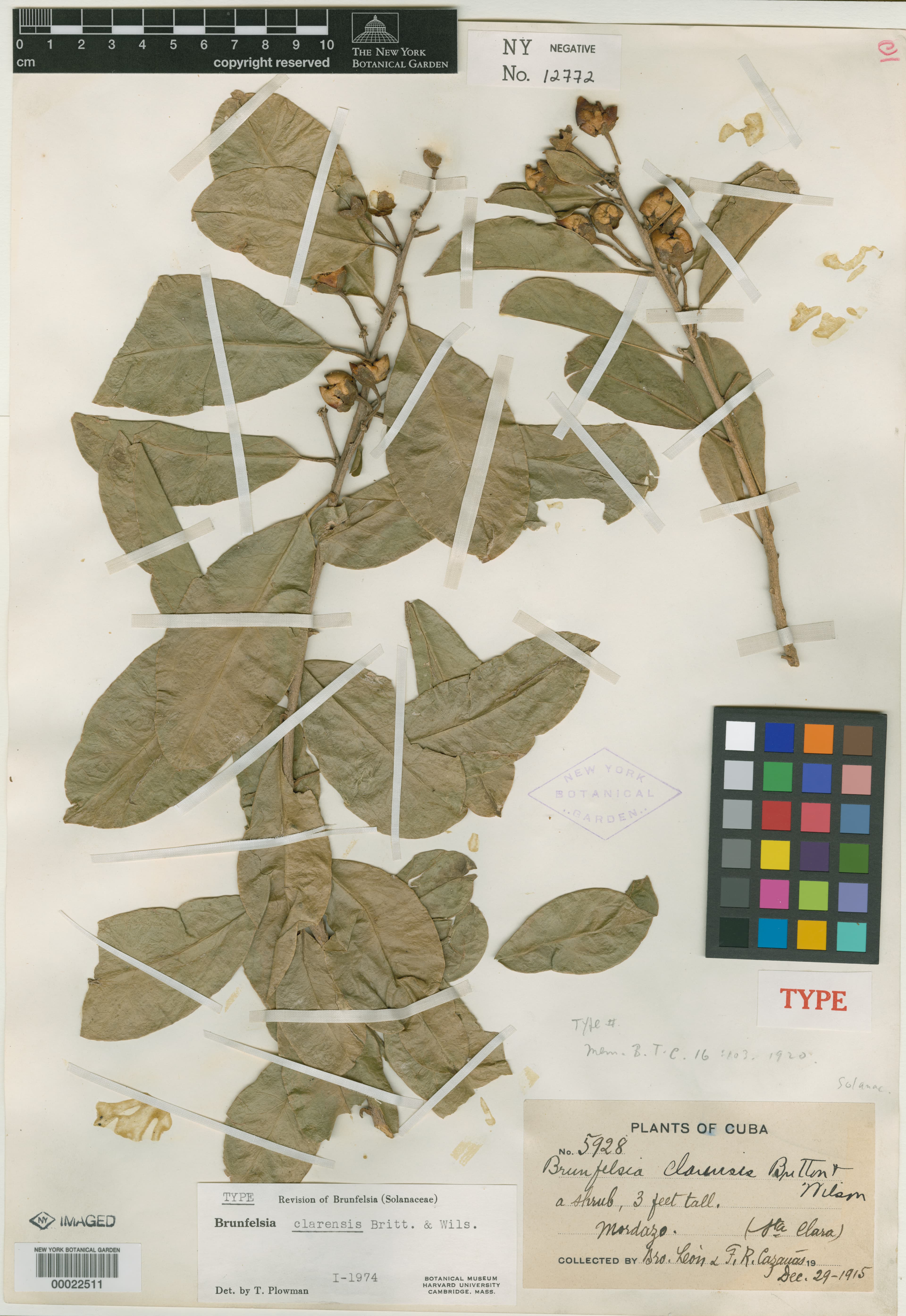
Brunfelsia clarensis
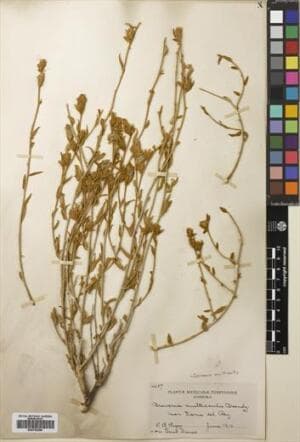
Image: The New York Botanical Garden (cc-by)
NameBrunfelsia clarensis
Scientific NameBrunfelsia clarensis Britton & P.Wilson
Plant FamilySolanaceae
Natural HabitatEndemic to Cuba, specifically collected from regions such as Mordazo in Santa Clara province. It is found in specific local habitats within its restricted range.
Parts Usedroot,bark,leaf
Medicinal Actionsnervine, sedative, anti-inflammatory
Traditional UsesTraditionally, various Brunfelsia species, including potentially B. clarensis, have been used by indigenous communities for their purgative, emetic, and psychoactive properties. They have also been employed in folk medicine to treat fevers, rheumatism, and syphilis, and as a ceremonial hallucinogen, often with extreme caution due to toxicity.
Active Constituentsbrunfelsamidine, manacine, scopoletin, alkaloids
Preparation Methodsdecoction, tincture, powder
Contraindications & WarningsAll parts of Brunfelsia species are considered highly toxic, especially the roots. Ingestion can cause severe nausea, vomiting, diarrhea, tremors, convulsions, and hallucinations. It is contraindicated for pregnant or nursing women, children, and individuals with liver or kidney conditions. Use should be avoided due to significant toxicity.
Cultivation NotesBrunfelsia species generally prefer warm, humid climates with well-drained soil and partial shade. They are often grown as ornamental plants in tropical and subtropical regions, though specific cultivation details for B. clarensis are limited.
Rarityrare
Description
Brunfelsia clarensis is a woody shrub, typically growing to 3 feet tall. The herbarium specimen displays simple, entire, ovate to elliptic leaves, and branches bearing dried, spherical to ovoid fruits or capsules.