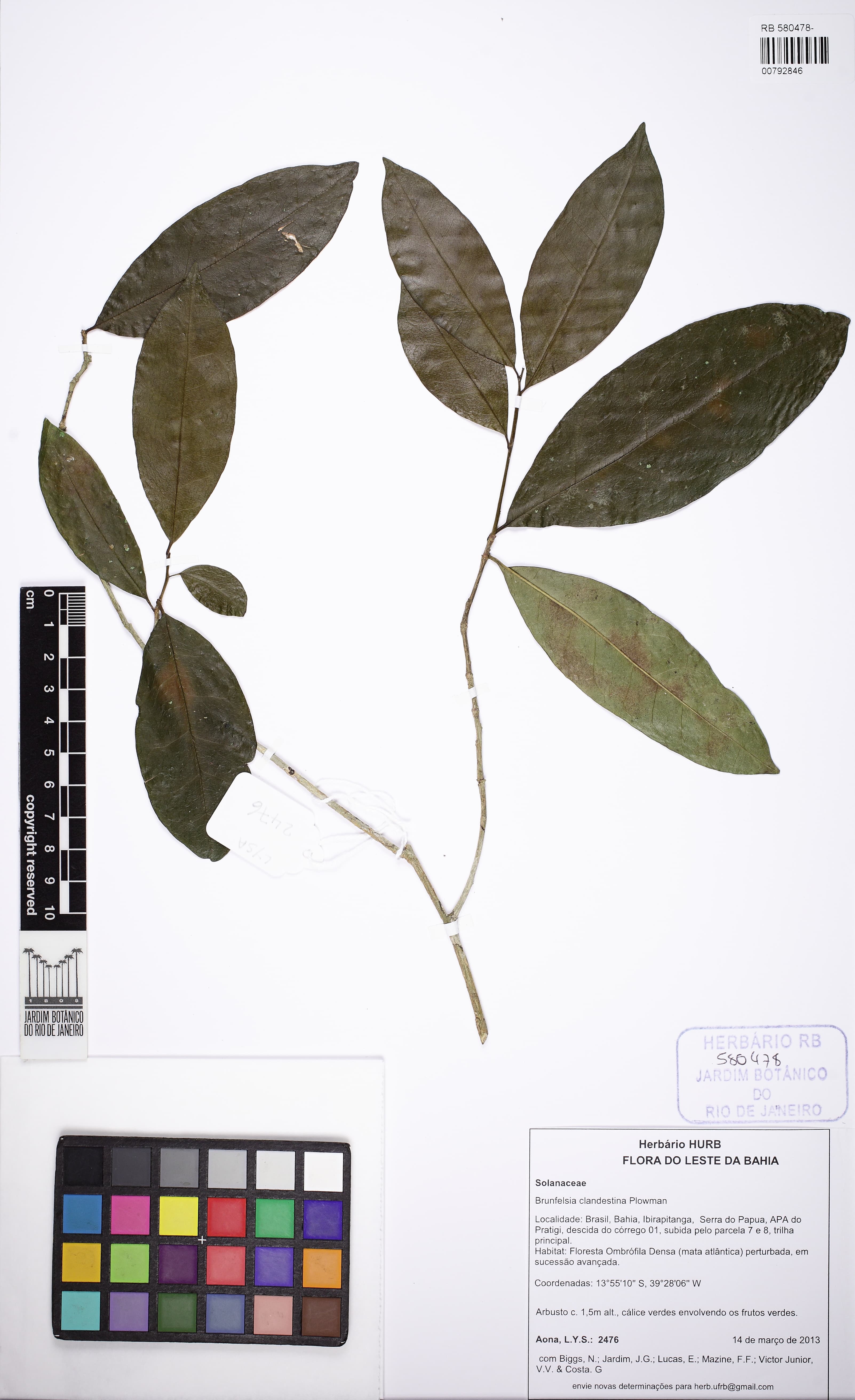
Brunfelsia clandestina
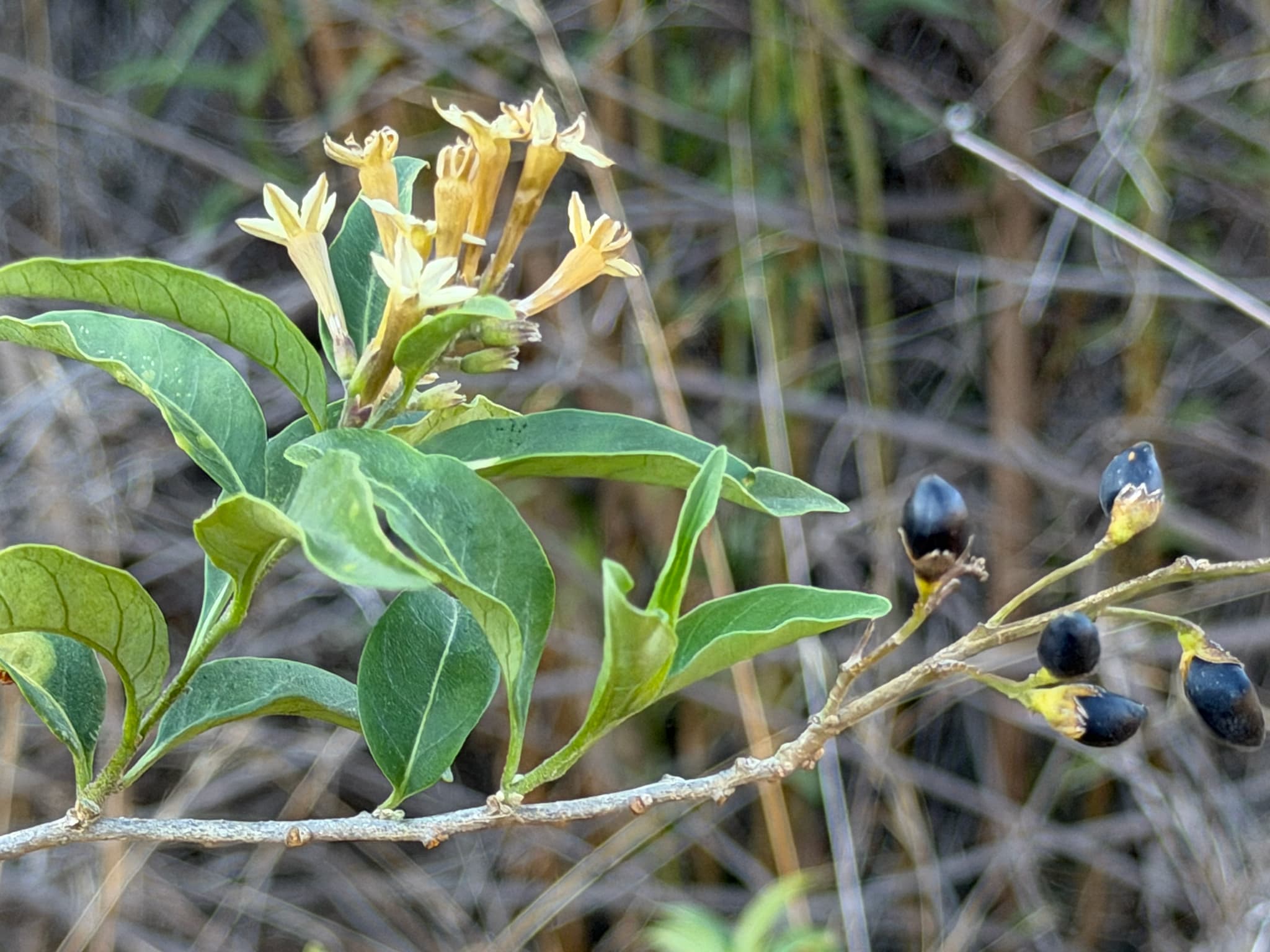
Image: L.Y.S. Aona; et al (cc-by)
NameBrunfelsia clandestina
Scientific NameBrunfelsia clandestina
Plant FamilySolanaceae
Natural HabitatNative to the disturbed Dense Ombrophilous Forest (Atlantic Forest) in Brazil, found in areas undergoing advanced ecological succession.
Parts Usedroot,bark,leaf,fruit
Medicinal Actionsanalgesic, anti-inflammatory, nervine, sedative
Traditional UsesTraditionally, various Brunfelsia species, including potentially B. clandestina, have been used in South American indigenous medicine for treating fevers, rheumatism, and syphilis. They are also known for their purgative, emetic, and psychoactive properties, sometimes employed in spiritual rituals.
Active Constituentstropane alkaloids, scopolamine, hyoscyamine, atropine, coumarins, scopoletin
Preparation Methodsinfusion, decoction, tincture, powder
Contraindications & WarningsAll parts of Brunfelsia clandestina are considered highly toxic due to the presence of potent tropane alkaloids. Contraindications include pregnancy, breastfeeding, children, individuals with heart conditions, glaucoma, prostate enlargement, and concurrent use with anticholinergic or CNS-depressant medications. Use is not recommended without expert medical supervision.
Cultivation NotesThis species thrives in tropical to subtropical climates with well-drained, fertile soil. It can tolerate partial shade to full sun, often preferring some shade, and is typically grown as an ornamental shrub.
Rarityuncommon
Description
Brunfelsia clandestina is a shrub typically growing to about 1.5 meters tall. Its branches bear simple, alternate, entire leaves, and it produces green fruits enclosed by green calyxes.