Branching Dodder
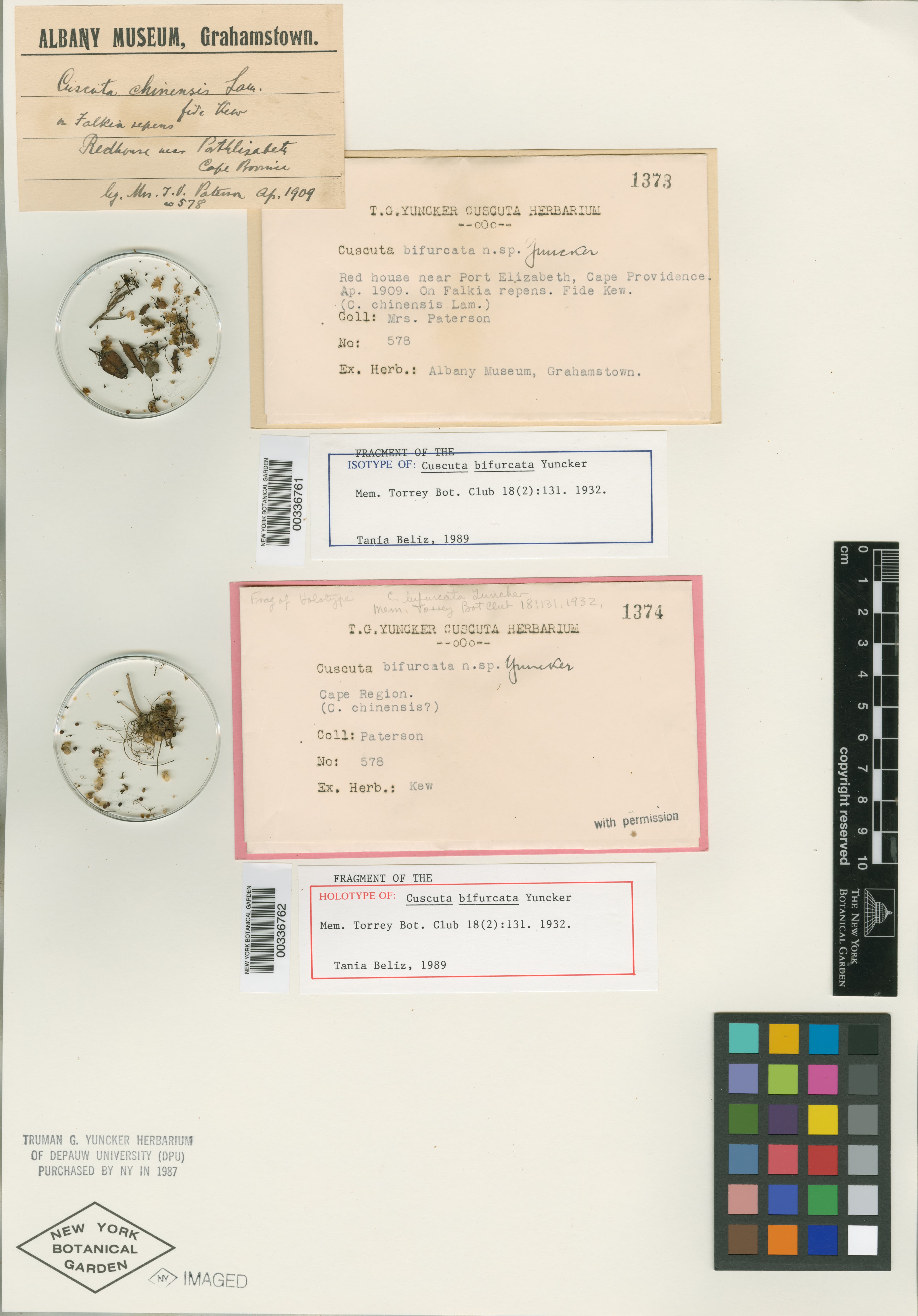
Image: The New York Botanical Garden (cc-by)
NameBranching Dodder
Scientific NameCuscuta bifurcata Yunck.
Common NamesBranching Dodder, Dodder
Plant FamilyConvolvulaceae
Natural HabitatAs an obligate parasite, Cuscuta bifurcata grows directly on various host plants, often found in disturbed areas, fields, and along roadsides. The type specimen was collected on 'Falkia repens' near Port Elizabeth, Cape Province, indicating its presence in specific regional ecosystems.
Parts Usedseed,whole_plant
Medicinal Actionsadaptogen, antioxidant, astringent, diuretic
Traditional UsesIn Traditional Chinese Medicine (TCM), seeds of Cuscuta species (known as Tu Si Zi) are traditionally used to tonify the kidney and liver, improve vision, and strengthen bones and muscles. They are employed to treat conditions such as impotence, premature ejaculation, frequent urination, lower back pain, blurred vision, and chronic diarrhea.
Active Constituentsflavonoids, lignans, polysaccharides, saponins
Preparation Methodsinfusion, decoction, powder
Contraindications & WarningsGenerally considered safe in traditional doses, but caution is advised during pregnancy and for individuals with yin deficiency with heat signs. As a parasitic plant, it can be a significant agricultural pest.
Cultivation NotesDodder species are obligate parasites and cannot be cultivated independently. They require a suitable host plant to germinate and grow, attaching via haustoria to draw nutrients. Cultivation is typically avoided due to its parasitic nature and potential harm to other plants.
Rarityuncommon
Description
Cuscuta bifurcata is an annual, parasitic plant characterized by its slender, thread-like, yellowish-orange stems that twine around host plants. It lacks true leaves and chlorophyll, obtaining nutrients through haustoria that penetrate the host's vascular tissue. The image displays dried specimens including tangled stems and small, globular seed capsules.