Bladderwrack
NameBladderwrack
Scientific NameFucus vesiculosus
Common NamesBladderwrack, Sea Oak, Black Tang, Rockweed, Cut Weed, Bladder Fucus
Plant FamilyFucaceae
Natural HabitatThis seaweed thrives in the intertidal zone of rocky shores, particularly in sheltered areas, along the coasts of the Atlantic and Pacific Oceans, as well as the North Sea and Baltic Sea.
Parts Usedwhole_plant
Medicinal Actionsanti-inflammatory, antioxidant, diuretic, adaptogen
Traditional UsesTraditionally, Bladderwrack has been used to support thyroid function due to its high iodine content, aiding in conditions like goiter and hypothyroidism. It has also been employed for weight management, joint pain, and as a topical application for skin conditions and inflammation.
Active ConstituentsIodine, Fucoidans, Phlorotannins, Alginic acid, Minerals
Preparation Methodsinfusion, decoction, powder, tincture
Contraindications & WarningsContraindicated in individuals with hyperthyroidism or those sensitive to iodine. Caution is advised for people on blood-thinning medications due to potential anticoagulant effects of fucoidans, and for those with pre-existing thyroid conditions or taking thyroid hormones.
Cultivation NotesBladderwrack is not typically cultivated in controlled environments but is sustainably harvested from its natural marine habitat. It requires specific marine conditions, including rocky substrates and tidal exposure, to grow.
Raritycommon
Description
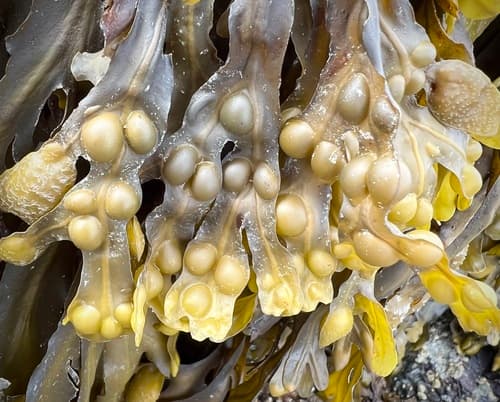
Bladderwrack is a brown alga characterized by its flattened, dichotomously branching thallus, often with prominent air bladders (vesicles) arranged in pairs along the midrib. Its color ranges from olive-green to dark brown, and it attaches to rocks via a disc-shaped holdfast.