Berlandier's wolfberry
NameBerlandier's wolfberry
Scientific NameLycium berlandieri
Common NamesBerlandier's wolfberry, Desert wolfberry, Berlandier's desert thorn
Plant FamilySolanaceae
Natural HabitatNative to arid and semi-arid regions of the southwestern United States and northern Mexico, growing in deserts, scrublands, rocky slopes, and disturbed areas. It is highly drought-tolerant and often found in alkaline soils.
Parts Usedfruit,leaf
Medicinal Actionsantioxidant, adaptogen
Traditional UsesTraditionally, the berries of Berlandier's wolfberry have been consumed as food by indigenous peoples, both fresh and dried, for their nutritional value. They are believed to support general health, vitality, and vision, similar to other wolfberry species.
Active ConstituentsPolysaccharides, Carotenoids, Flavonoids, Vitamins
Preparation Methodsinfusion, powder
Contraindications & WarningsGenerally considered safe when consumed as food. However, as with other Lycium species, caution is advised for individuals on blood-thinning medications (e.g., warfarin) due to potential interactions, and for those with diabetes due to possible blood sugar effects.
Cultivation NotesThis hardy shrub thrives in full sun and well-drained, often poor, soils. It is highly drought-tolerant once established and requires minimal water, making it suitable for xeriscaping in warm, arid climates. It can be propagated by seed or cuttings.
Raritycommon
Description
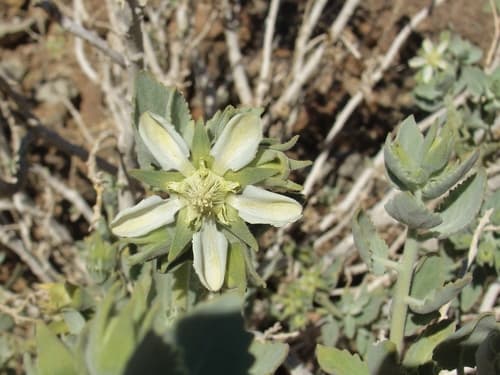
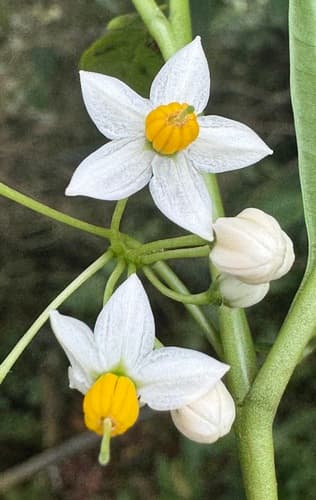
This thorny, deciduous shrub features small, simple, often somewhat succulent leaves and produces small, pale, star-shaped flowers with five petals and prominent stamens. The flowers typically range from white to pale lavender or greenish-white, giving way to small, red or orange berries.