Solanum psychotrioides
NameSolanum psychotrioides
Scientific NameSolanum psychotrioides
Common NamesJurubeba-branca
Plant FamilySolanaceae
Natural HabitatNative to Brazil, Solanum psychotrioides is found in various biomes including the Cerrado, Atlantic Forest, and Amazon rainforest. It typically thrives in secondary vegetation, forest edges, and disturbed areas.
Parts Usedleaf,root,fruit
Medicinal Actionsanti-inflammatory, diuretic, antioxidant
Traditional UsesTraditionally, Solanum psychotrioides is used in Brazilian folk medicine, often as part of the 'jurubeba' complex, for liver and digestive issues such as dyspepsia and hepatitis. It is also employed for fevers and as a general tonic, with some traditional uses suggesting hepatoprotective properties.
Active Constituentssteroidal glycoalkaloids, solasodine derivatives, flavonoids, saponins
Preparation Methodsinfusion, decoction
Contraindications & WarningsDue to the presence of glycoalkaloids, Solanum psychotrioides can be toxic, especially in high doses. It should be used with caution by pregnant and lactating women, and individuals with pre-existing liver conditions. Potential for gastrointestinal upset exists.
Cultivation NotesThis plant prefers tropical to subtropical climates with well-drained soil. It can tolerate some shade but generally thrives in full sun. Propagation is typically achieved through seeds.
Raritycommon
Description
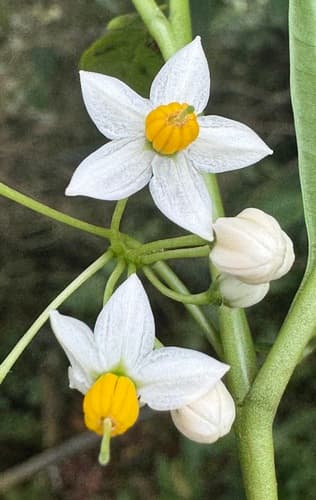
Solanum psychotrioides is a shrub or small tree characterized by its white, star-shaped flowers, each featuring five petals and prominent yellow anthers fused into a cone, as seen in the image. It produces small, spherical fruits that mature from green to yellow or orange. This species is part of the diverse Solanum genus.