Bedstraw (Cleavers)
NameBedstraw (Cleavers)
Scientific NameGalium aparine
Common NamesCleavers, Goosegrass, Catchweed, Sticky Willy, Grip Grass, Coachweed
Plant FamilyRubiaceae
Natural HabitatCommonly found in disturbed areas, hedgerows, gardens, cultivated fields, woodlands, and waste ground across temperate regions worldwide. It thrives in moist, fertile soils.
Parts Usedwhole_plant
Medicinal Actionsdiuretic, astringent, anti-inflammatory, antimicrobial
Traditional UsesTraditionally used as a lymphatic tonic to support the lymphatic system, aid in detoxification, and reduce swollen glands. It is also valued as a diuretic for urinary tract issues, to help flush toxins, and for skin conditions like eczema, psoriasis, and minor wounds, often applied as a poultice or wash.
Active ConstituentsIridoid glycosides, Coumarins, Flavonoids, Phenolic acids, Tannins, Saponins
Preparation Methodsinfusion, tincture, poultice, powder
Contraindications & WarningsGenerally considered safe, but large doses may cause skin irritation in sensitive individuals. Caution is advised for individuals with kidney disease or those taking diuretic medications, as it may potentiate their effects.
Cultivation NotesEasily grows from seed in most temperate climates. It prefers moist, fertile soil and partial shade but tolerates full sun. It can be quite invasive due to its prolific seeding and clinging nature.
Raritycommon
Description
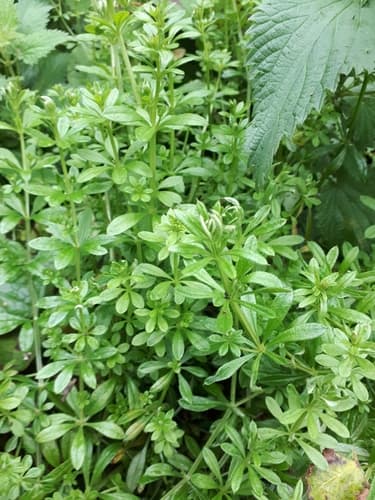
Galium aparine is an annual herbaceous plant characterized by its weak, square stems covered in tiny hooked bristles, which allow it to cling to clothing and other plants. Its leaves are arranged in whorls of 6 to 8 around the stem, and it produces small, inconspicuous white flowers followed by burr-like fruits.