Bedstraw (Cleavers)
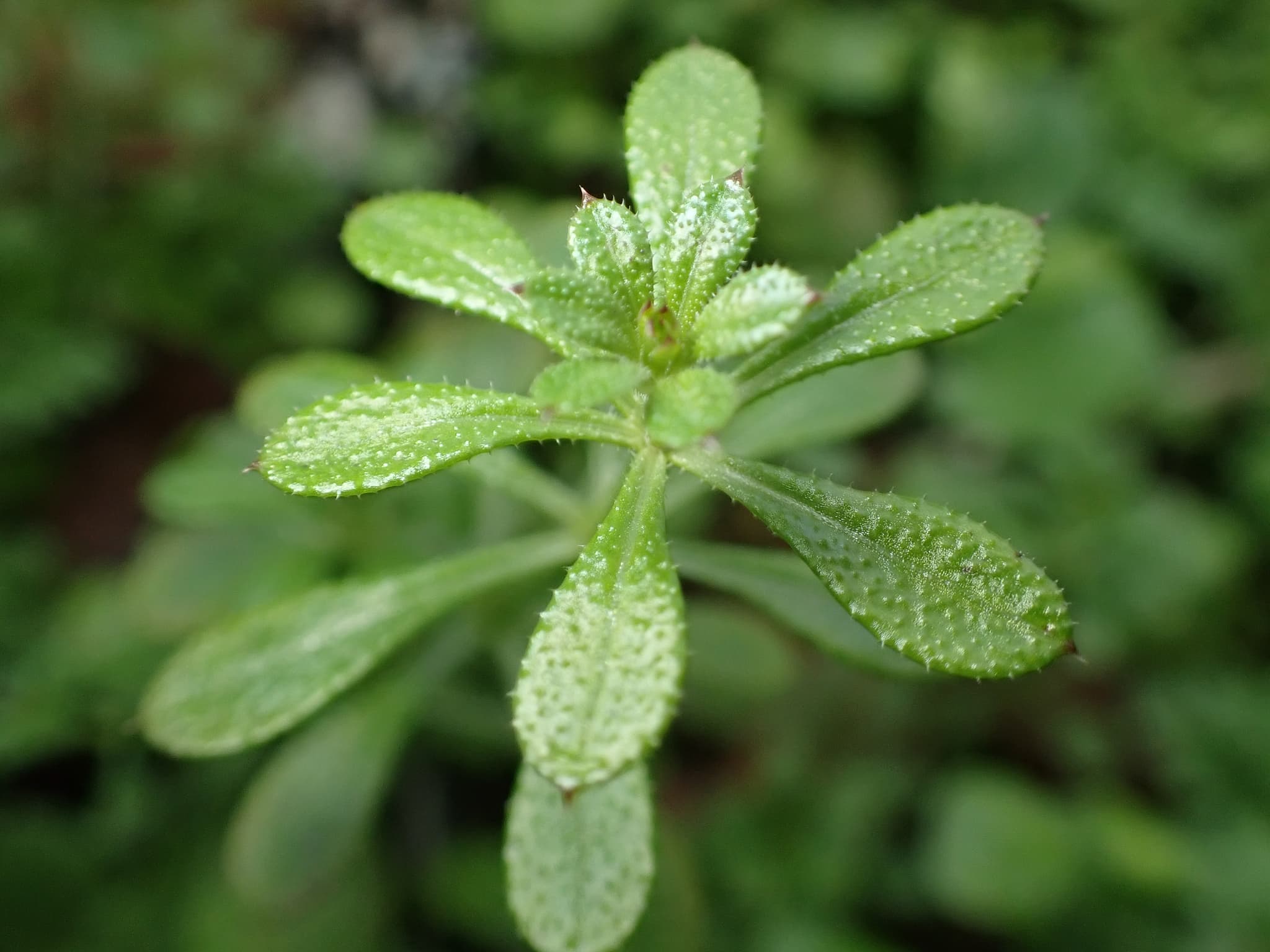
Image: John D Reynolds (cc-by-nc)
NameBedstraw (Cleavers)
Scientific NameGalium aparine
Common NamesCleavers, Goosegrass, Sticky Willy, Catchweed, Grip Grass
Plant FamilyRubiaceae
Natural HabitatCommonly found in temperate regions worldwide, growing in hedgerows, woodlands, cultivated fields, gardens, and disturbed areas. It prefers moist, fertile soil.
Parts Usedwhole_plant
Medicinal Actionsdiuretic, anti-inflammatory, astringent
Traditional UsesTraditionally used as a lymphatic tonic and diuretic, Cleavers is valued for supporting kidney and urinary tract health, helping to clear toxins, and reducing fluid retention. It is also applied externally as a poultice for skin conditions like eczema, psoriasis, and minor wounds, and internally for swollen glands and inflammatory conditions.
Active ConstituentsIridoid glycosides (e.g., asperuloside), Coumarins, Flavonoids, Phenolic acids, Tannins, Saponins
Preparation Methodsinfusion, tincture, poultice
Contraindications & WarningsGenerally considered safe, but large doses may cause skin irritation in sensitive individuals. Due to its diuretic properties, it should be used with caution by individuals on diuretic medications. Not recommended for use during pregnancy or breastfeeding without professional medical advice.
Cultivation NotesCleavers is a prolific self-seeder and often considered a weed, thriving in moist, fertile soil and partial shade to full sun. It is easily propagated from seed or by simply allowing it to grow where it naturally appears, requiring little cultivation effort.
Raritycommon
Description
Galium aparine is an annual plant characterized by its sprawling, square stems covered in tiny, hooked bristles that allow it to cling to surfaces. Its leaves are narrow, lance-shaped, and arranged in whorls of 6-8 around the stem.