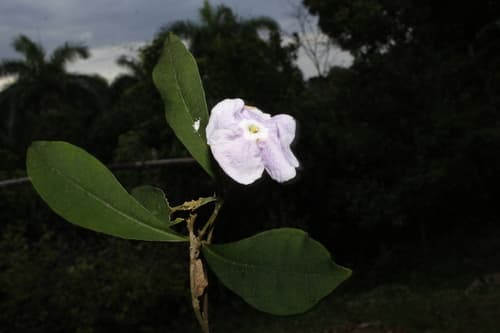
Brunfelsia cestroides
NameBrunfelsia cestroides
Scientific NameBrunfelsia cestroides
Common NamesManacá, Yesterday-Today-and-Tomorrow
Plant FamilySolanaceae
Natural HabitatNative to tropical and subtropical regions of South America, particularly Brazil, where it grows in forests, forest margins, and disturbed areas. It thrives in warm, humid environments.
Parts Usedroot,bark,leaf
Medicinal Actionsanalgesic, diuretic
Traditional UsesTraditionally, various parts of Brunfelsia cestroides have been used in South American folk medicine, particularly the root, for treating rheumatism, syphilis, fever, and snake bites. It is also known for its purgative and emetic properties, and in some indigenous cultures, it has been used for its psychoactive effects in shamanic rituals.
Active ConstituentsBrunfelsamidine, Scopoletin, Coumarins, Alkaloids
Preparation Methodsdecoction, tincture
Contraindications & WarningsALL parts of Brunfelsia cestroides are highly toxic and poisonous, especially the root. Ingestion can cause severe nausea, vomiting, diarrhea, tremors, convulsions, paralysis, and can be fatal. It is strictly contraindicated for pregnant or lactating women, children, and individuals without expert medical supervision. Due to its potent psychoactive and toxic compounds, it should never be used without extreme caution and professional guidance.
Cultivation NotesThis plant prefers warm, humid climates and well-drained, rich soil. It can tolerate partial shade to full sun, but often performs best with some afternoon shade in hotter climates. It is commonly cultivated as an ornamental shrub for its attractive, fragrant flowers.
Raritycommon
Description
Brunfelsia cestroides is a small, evergreen shrub or tree, typically growing 1-3 meters tall, characterized by its simple, alternate, dark green leaves. It produces striking tubular flowers that often change color over several days, typically starting purple and fading to white or pale lavender, as seen in the image.