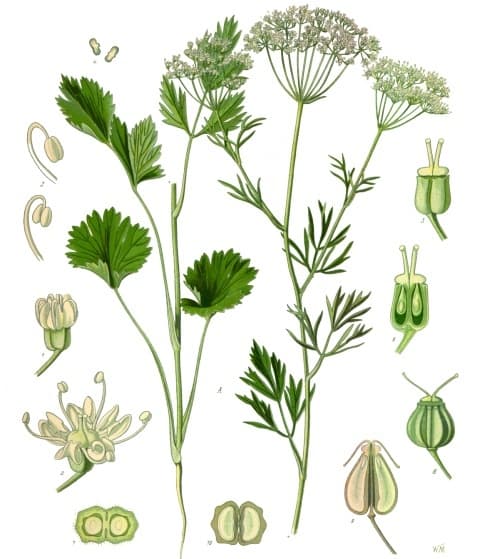
Anise
Image: Franz Eugen Köhler, Köhler's Medizinal-Pflanzen (Public domain)
NameAnise
Scientific NamePimpinella anisum
Common NamesAnise, Aniseed
Plant FamilyApiaceae
Natural HabitatNative to the Mediterranean region and Southwest Asia, Anise thrives in warm, sunny climates with well-drained, fertile soil. It is widely cultivated globally for its culinary and medicinal properties.
Parts Usedseed
Medicinal Actionscarminative, expectorant, antimicrobial, anti-inflammatory, antioxidant
Traditional UsesTraditionally, Anise is used to relieve flatulence, indigestion, and colic, particularly in infants. It is also employed as an expectorant for coughs and bronchitis, to stimulate lactation, and as a breath freshener. Its sweet, licorice-like flavor makes it a popular culinary spice.
Active ConstituentsAnethole, Estragole, Limonene, Gamma-himachalene
Preparation Methodsinfusion, essential oil, powder, tincture
Contraindications & WarningsMay cause allergic reactions in sensitive individuals, especially those allergic to other plants in the Apiaceae family (e.g., celery, carrot). High doses of the essential oil can be toxic. It should be used with caution during pregnancy and may interact with anticoagulant medications.
Cultivation NotesAnise prefers full sun and well-drained, fertile soil. Seeds should be sown directly after the last frost, as it does not transplant well. It requires a long, warm growing season to produce mature seeds.
Raritycommon
Description
Anise is an annual herbaceous plant growing up to 60 cm tall. It features finely divided, feathery leaves on the upper stem and broader, lobed leaves at the base, topped with delicate white flowers arranged in compound umbels. The plant produces small, ovoid, ribbed fruits (commonly called seeds) that are highly aromatic.