American elm
NameAmerican elm
Scientific NameUlmus americana
Common NamesAmerican Elm, White Elm, Water Elm
Plant FamilyUlmaceae
Natural HabitatFound in a variety of habitats, including floodplains, moist woodlands, riverbanks, and rich upland forests. It prefers deep, fertile, well-drained soils but is adaptable.
Parts Usedbark
Medicinal Actionsdemulcent, anti-inflammatory, astringent
Traditional UsesTraditionally, the inner bark of American elm has been used to soothe inflamed mucous membranes in the digestive and respiratory tracts, treating conditions like sore throats, coughs, diarrhea, and ulcers. It was also applied externally as a poultice for wounds, boils, and skin irritations.
Active ConstituentsMucilage, tannins, phytosterols, flavonoids
Preparation Methodsdecoction, poultice, powder
Contraindications & WarningsGenerally considered safe. Due to its high mucilage content, it may interfere with the absorption of other medications; it is advisable to take it separately from other drugs.
Cultivation NotesPrefers full sun to partial shade and moist, well-drained, fertile soil. It is highly susceptible to Dutch Elm Disease, which has severely impacted its population. Can be propagated by seed or cuttings.
Rarityuncommon
Description
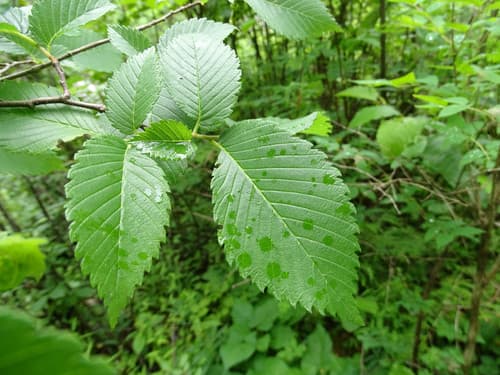
A large, deciduous tree native to eastern North America, known for its distinctive vase-shaped crown. Its leaves are alternate, simple, doubly serrate, and typically asymmetrical at the base.