St. John's Wort
NameSt. John's Wort
Scientific NameHypericum perforatum
Common NamesSt. John's Wort, Common St. John's Wort, Klamath Weed, Tipton's Weed
Plant FamilyHypericaceae
Natural HabitatThis plant thrives in sunny, disturbed areas such as meadows, pastures, roadsides, clearings, and waste grounds. It prefers well-drained soil and is often found in temperate regions worldwide.
Parts Usedflower,leaf
Medicinal Actionsanti-inflammatory, antimicrobial, antioxidant, astringent, nervine
Traditional UsesTraditionally, St. John's Wort has been used for mild to moderate depression, anxiety, and nerve pain. Topically, it has been applied as an oil or salve for wound healing, burns, bruises, and muscle pain due to its anti-inflammatory and antimicrobial properties.
Active ConstituentsHypericin, Hyperforin, Flavonoids, Tannins
Preparation Methodsinfusion, tincture, powder, salve
Contraindications & WarningsSt. John's Wort can cause photosensitivity, especially in fair-skinned individuals. It has significant drug interactions, including reducing the effectiveness of oral contraceptives, anticoagulants, antiretrovirals, and immunosuppressants. It should not be combined with antidepressant medications (SSRIs, MAOIs) due to the risk of serotonin syndrome.
Cultivation NotesSt. John's Wort is easily cultivated from seed or cuttings in full sun to partial shade and well-drained soil. It is drought-tolerant once established and can readily self-seed, sometimes becoming invasive in certain regions.
Raritycommon
Description
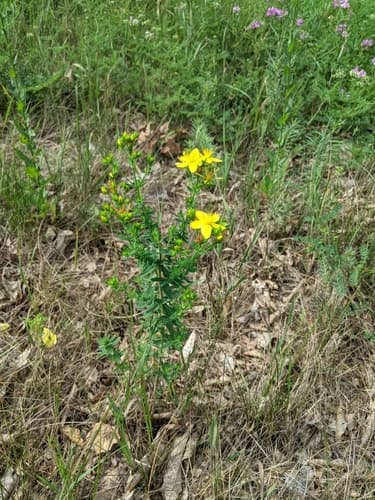
St. John's Wort is an herbaceous perennial plant characterized by its bright yellow, five-petaled flowers often dotted with black glands, and opposite, oval leaves that appear 'perforated' when held up to light due to translucent oil glands. It typically grows to 1-3 feet tall with numerous branching stems.