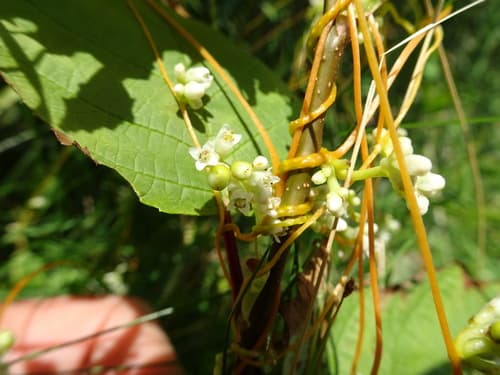
Acadian Dodder
NameAcadian Dodder
Scientific NameCuscuta gronovii
Common NamesAcadian Dodder, Common Dodder, Gronovius' Dodder, Scaldweed, Love Vine
Plant FamilyConvolvulaceae
Natural HabitatThis parasitic plant is commonly found in moist, disturbed areas such as wetlands, stream banks, ditches, and fields, where it parasitizes a wide range of herbaceous and woody plants. It is native to North America.
Parts Usedwhole_plant
Medicinal Actionsadaptogen, anti-inflammatory, antioxidant, diuretic
Traditional UsesWhile specific traditional uses for *Cuscuta gronovii* are less documented than for some Asian dodder species, the genus *Cuscuta* has been traditionally used by various cultures. In some Native American traditions, dodder species were employed for issues such as urinary complaints or as a laxative. Other *Cuscuta* species, particularly in Traditional Chinese Medicine, are valued as a kidney and liver tonic, to improve vision, and to address conditions like impotence and frequent urination, often attributed to its adaptogenic and anti-inflammatory properties.
Active ConstituentsFlavonoids, Lignans, Polysaccharides, Coumarins
Preparation Methodsinfusion, decoction, tincture, powder
Contraindications & WarningsDue to its parasitic nature and the potential for varying chemical compositions, caution is advised. Pregnant or breastfeeding individuals should avoid its use. It may interact with certain medications, and professional guidance is recommended before use.
Cultivation NotesAcadian Dodder is a parasitic plant that cannot be cultivated independently; it requires a host plant for survival. It is often considered a weed in agricultural and garden settings, reproducing readily from seeds and spreading by its twining stems.
Raritycommon
Description
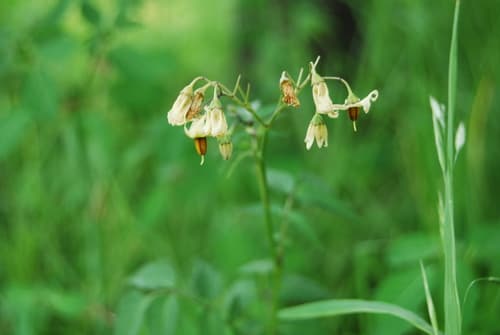
Acadian Dodder is a parasitic annual vine characterized by its slender, leafless, yellowish-orange stems that twine tightly around host plants. It produces small clusters of white to cream-colored, bell-shaped flowers along its stems, typically in late summer.