Zambezi Morning-Glory
NameZambezi Morning-Glory
Scientific NameIpomoea adenioides
Common NamesZambezi Morning-Glory, Bush Morning Glory
Plant FamilyConvolvulaceae
Natural HabitatNative to Southern Africa, it thrives in dry woodlands, savannas, and rocky areas, often preferring sandy or well-drained soils. It is well-adapted to arid and semi-arid conditions.
Parts Usedroot,leaf
Medicinal Actionsanalgesic, anti-inflammatory, diuretic
Traditional UsesIn traditional African medicine, various *Ipomoea* species, including those related to Zambezi Morning-Glory, are used for their medicinal properties. Preparations from the roots and leaves are traditionally employed to alleviate pain, reduce inflammation, treat skin ailments, and as a diuretic. Some species are also known for their purgative effects.
Active Constituentsresin glycosides, flavonoids
Preparation Methodsdecoction, poultice, powder
Contraindications & WarningsMany *Ipomoea* species contain potent resin glycosides that can cause strong purgative effects and gastrointestinal upset if ingested in large quantities. Pregnant or breastfeeding women, young children, and individuals with severe gastrointestinal conditions should avoid internal use. Consult a healthcare professional before use.
Cultivation NotesThis plant prefers full sun and well-drained soil, showing good drought tolerance once established. It can be propagated from seeds or cuttings and is suitable for xeriscaping or dry garden environments in appropriate climates.
Raritycommon
Description
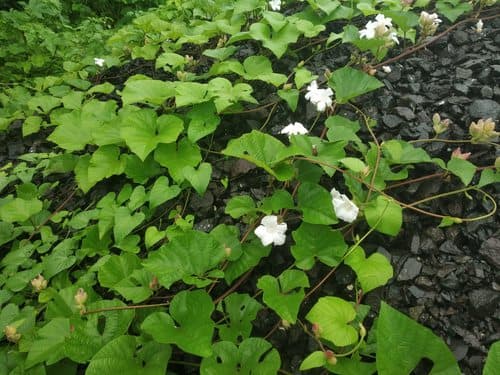
Zambezi Morning-Glory is a woody shrub or scrambling climber, often found in dry woodlands. It features striking trumpet-shaped flowers, typically vibrant pink to purple with a darker throat, which emerge on leafless or sparsely leaved branches.