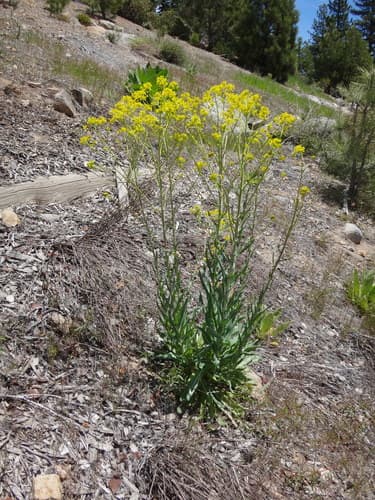
Woad
NameWoad
Scientific NameIsatis tinctoria
Common NamesWoad, Dyer's Woad, Asp of Jerusalem
Plant FamilyBrassicaceae
Natural HabitatNative to steppe and desert regions of Southern Europe, Central Asia, and the Caucasus, Woad thrives in disturbed soils, roadsides, fields, and waste areas. It is often found as a naturalized or invasive species in temperate regions worldwide.
Parts Usedleaf,root,seed
Medicinal Actionsantimicrobial, anti-inflammatory, antioxidant
Traditional UsesIn Traditional Chinese Medicine (TCM), the root (Ban Lan Gen) and leaves (Da Qing Ye) are widely used for their antiviral and antibacterial properties. It is traditionally employed to treat viral infections like the common cold, flu, mumps, and measles, as well as for sore throats, fevers, and inflammatory conditions. Topically, it has been used for skin infections and swellings.
Active ConstituentsIndirubin, indigo, isatin, sinigrin, glucobrassicin, epiprogoitrin, tryptanthrin
Preparation Methodsinfusion, decoction, powder, poultice
Contraindications & WarningsGenerally considered safe for short-term use. Long-term or high-dose use may cause gastrointestinal upset. Caution is advised for individuals with thyroid disorders due to the presence of goitrogenic compounds. Not recommended for pregnant or breastfeeding women without professional medical advice.
Cultivation NotesWoad is a hardy and adaptable plant that prefers full sun and well-drained soil, tolerating a range of soil types, including poor ones. It is easily grown from seed and can become invasive due to its vigorous self-seeding, requiring management to prevent unwanted spread.
Raritycommon
Description
A biennial plant, Woad forms a basal rosette of bluish-green leaves in its first year, followed by tall, branched flowering stalks up to 1 meter high in its second year. These stalks bear numerous small, four-petaled yellow flowers, which develop into distinctive dark, pendulous, paddle-shaped seed pods.