Wild Yam
Image: Jim Brighton (cc-by-nc)
NameWild Yam
Scientific NameDioscorea villosa
Common NamesWild Yam, Colic Root, Rheumatism Root, China Root, Devil's Bones
Plant FamilyDioscoreaceae
Natural HabitatTypically found in moist woodlands, thickets, and along stream banks, preferring rich, well-drained soil and partial shade.
Parts Usedroot
Medicinal Actionsanti-inflammatory, demulcent, nervine
Traditional UsesTraditionally, Wild Yam root has been used to alleviate menstrual cramps, menopausal symptoms, and muscle spasms due to its antispasmodic properties. It was also employed for digestive complaints such as colic and irritable bowel syndrome, and for inflammatory conditions like rheumatism.
Active Constituentsdiosgenin, steroidal saponins, alkaloids, tannins
Preparation Methodsdecoction, tincture, powder
Contraindications & WarningsNot recommended during pregnancy due to potential hormonal effects. Caution is advised for individuals with hormone-sensitive conditions (e.g., breast cancer, endometriosis) or those on hormone replacement therapy, as diosgenin can be a precursor to steroid hormones, though direct conversion in the human body is debated.
Cultivation NotesWild Yam prefers moist, fertile, well-drained soil and partial to full shade. As a climbing vine, it requires a trellis or other support structure to grow effectively.
Raritycommon
Description
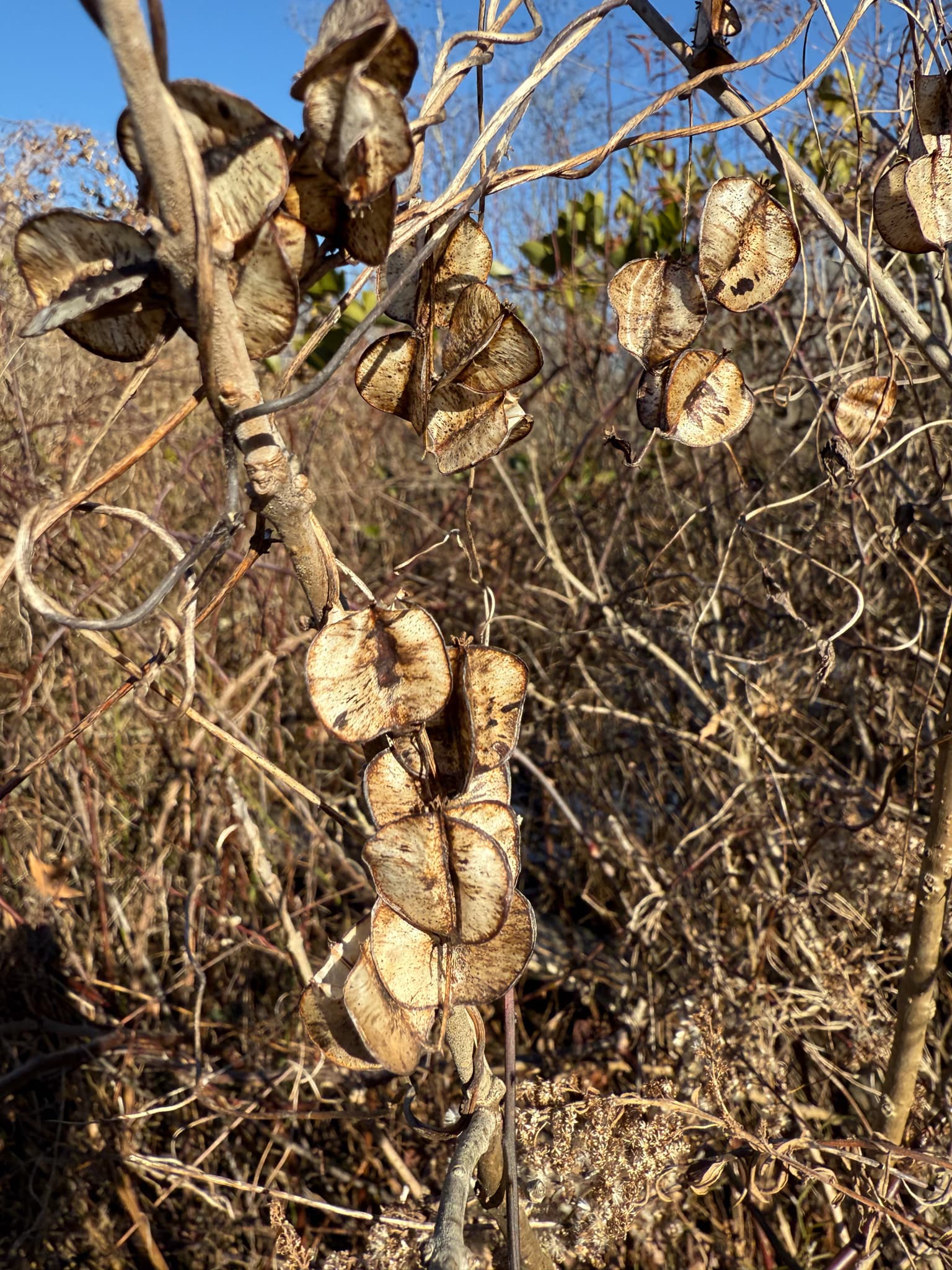
Wild Yam is a perennial, twining vine native to eastern North America, characterized by its heart-shaped leaves and small, greenish-yellow flowers. The plant produces distinctive three-winged, papery seed capsules that often persist on the dried vines through winter, as seen in the image.