Vervain
NameVervain
Scientific NameVerbena officinalis
Common NamesVervain, Common Vervain, Herb of Grace, Holy Herb, Enchanter's Herb
Plant FamilyVerbenaceae
Natural HabitatIt typically thrives in disturbed ground, roadsides, meadows, waste places, and dry, grassy areas, preferring full sun and well-drained soil. Native to Europe and Asia, it has naturalized in many temperate regions worldwide.
Parts Usedwhole_plant,leaf,flower
Medicinal Actionsnervine, sedative, anti-inflammatory, antimicrobial, astringent, diuretic, expectorant
Traditional UsesTraditionally, Vervain has been used as a nervine tonic to alleviate stress, anxiety, nervous exhaustion, and to promote restful sleep. It has also been employed for digestive complaints, liver support, fevers, colds, coughs, and as a galactagogue. Topically, it was applied as a poultice for wounds and skin irritations.
Active ConstituentsVerbenalin, Verbascoside, Volatile oils (citral, limonene), Tannins, Mucilage, Flavonoids
Preparation Methodsinfusion, tincture, poultice, powder
Contraindications & WarningsNot recommended during pregnancy due to potential uterine stimulant effects. May interact with blood pressure medication or hormone therapy. Use with caution in individuals with low blood pressure.
Cultivation NotesVervain prefers full sun and well-drained soil. It can be propagated by seed or division, and once established, it is relatively drought-tolerant and can readily self-seed.
Raritycommon
Description
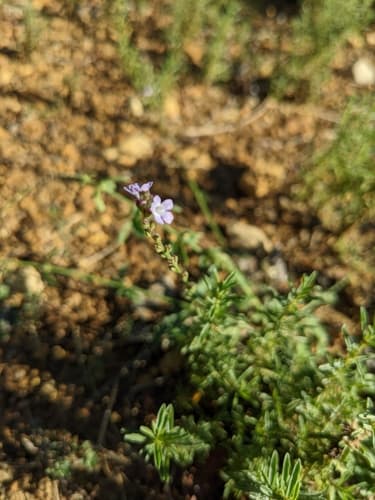
Verbena officinalis is a slender, perennial herbaceous plant growing up to 1 meter tall, characterized by square stems and small, pale lilac to pinkish-purple flowers arranged in terminal spikes. Its leaves are opposite, often deeply lobed or toothed, and somewhat hairy.