Thorny Popolo
NameThorny Popolo
Scientific NameSolanum carolinense
Common NamesCarolina Horsenettle, Horse Nettle, Ball-nettle, Sand Brier, Apple of Sodom
Plant FamilySolanaceae
Natural HabitatNative to the southeastern United States, it thrives in disturbed areas, pastures, fields, roadsides, and open woodlands. It is considered a noxious weed in many regions due to its aggressive spread.
Parts Usedroot,fruit
Medicinal Actionsanalgesic, sedative
Traditional UsesHistorically, Native American tribes used the root as a poultice for toothaches, swellings, and snakebites. A decoction of the root was sometimes used internally for conditions like epilepsy and fever. The berries were occasionally applied externally for ringworm or used internally as a sedative, though extreme caution was always exercised due to the plant's known toxicity.
Active ConstituentsSolasodine, Solanine, Solanidine, Tropane alkaloids
Preparation Methodsdecoction, poultice
Contraindications & WarningsALL parts of Solanum carolinense are considered toxic, especially the unripe berries, due to the presence of steroidal glycoalkaloids. Ingestion can cause severe gastrointestinal upset, neurological symptoms, and can be fatal. It should not be used internally without expert supervision and is generally not recommended for medicinal use. Avoid during pregnancy, lactation, and in individuals with liver or kidney conditions. May interact with central nervous system depressants.
Cultivation NotesGenerally considered a noxious weed, Thorny Popolo is rarely cultivated intentionally. It is highly adaptable and can grow in a wide range of soil types, preferring full sun to partial shade. It spreads aggressively by rhizomes and seeds, making it difficult to eradicate once established.
Raritycommon
Description
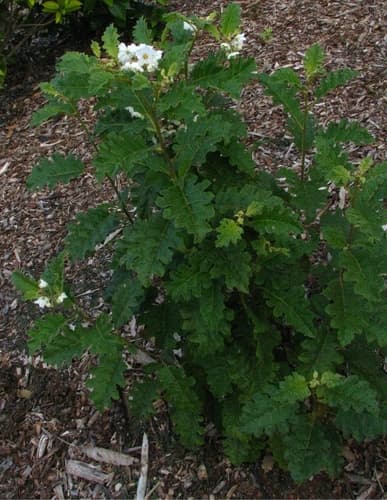
A perennial herbaceous plant or subshrub, typically growing 1-3 feet tall, characterized by deeply lobed, oak-like leaves and small white to pale violet star-shaped flowers. It often has sharp prickles on its stems and leaf veins, and produces yellow-orange berries.