Texas wolfberry
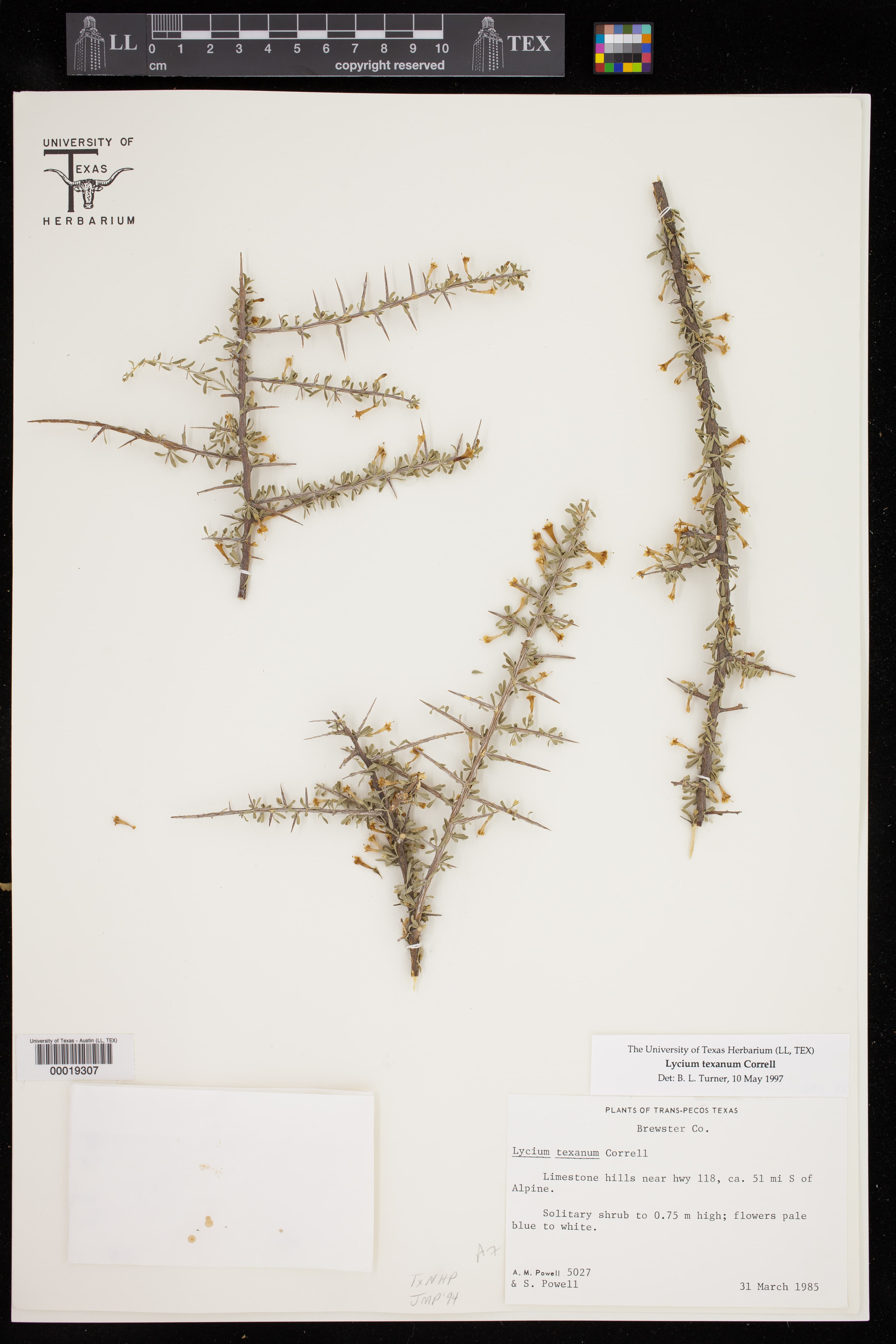
Image: Albert Michael Powell (cc0)
NameTexas wolfberry
Scientific NameLycium texanum Correll
Common NamesTexas wolfberry
Plant FamilySolanaceae
Natural HabitatNative to limestone hills and arid, rocky slopes in the Trans-Pecos region of West Texas, often found in desert scrub and Chihuahuan Desert environments.
Parts Usedfruit,leaf
Medicinal Actionsantioxidant, adaptogen, anti-inflammatory
Traditional UsesWhile specific traditional medicinal uses for Lycium texanum are not extensively documented, other species within the Lycium genus (such as Goji berries) have been traditionally used to support general well-being, enhance immune function, and improve vision.
Active Constituentspolysaccharides, carotenoids, flavonoids, vitamins
Preparation Methodsinfusion, powder, decoction
Contraindications & WarningsAs with other Lycium species, potential interactions with anticoagulant medications (e.g., warfarin) due to coumarin derivatives may exist. Allergic reactions are also possible.
Cultivation NotesPrefers full sun and well-drained, often calcareous (limestone) soils. It is highly drought-tolerant once established and can be propagated by seed or cuttings.
Rarityuncommon
Description
Lycium texanum is a thorny, deciduous shrub typically growing up to 0.75 meters high. It features small, spatulate leaves and produces solitary, pale blue to white, tubular flowers.