Teasel
NameTeasel
Scientific NameDipsacus fullonum
Common NamesTeasel, Wild Teasel, Fuller's Teasel
Plant FamilyDipsacaceae
Natural HabitatCommonly found in disturbed soils, roadsides, waste ground, meadows, and along riverbanks in temperate regions of Europe, Asia, and North Africa, and naturalized in North America.
Parts Usedroot,leaf,flower
Medicinal Actionsantimicrobial, anti-inflammatory, diuretic, antioxidant
Traditional UsesTraditionally, teasel root has been used in European folk medicine for various ailments, including skin conditions, joint pain, and as a diuretic. In modern herbalism, it has gained significant attention for its purported use in supporting individuals with Lyme disease, particularly for addressing symptoms like joint pain and fatigue.
Active ConstituentsIridoid glycosides (e.g., dipsacoside), saponins, caffeic acid derivatives, triterpenes
Preparation Methodstincture, decoction, powder
Contraindications & WarningsGenerally considered safe, but pregnant and breastfeeding women should avoid use due to lack of sufficient research. Individuals with known allergies to plants in the Dipsacaceae family should exercise caution.
Cultivation NotesTeasel is a hardy biennial that prefers full sun to partial shade and well-drained soil. It readily self-seeds and can become invasive in some areas, so consider its spread when planting.
Raritycommon
Description
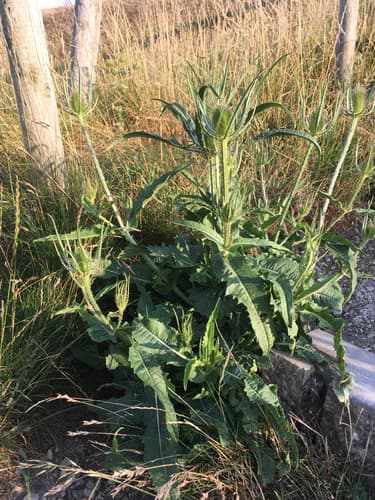
Teasel is a tall, biennial herbaceous plant characterized by its prickly stems and leaves, and distinctive egg-shaped flower heads that mature into spiny seed heads. Its large, lance-shaped basal leaves often form a rosette, and stem leaves are fused at the base, forming cups that collect water.