Sweet Potato
NameSweet Potato
Scientific NameIpomoea batatas
Common NamesSweet Potato, Kumara, Camote, Batata
Plant FamilyConvolvulaceae
Natural HabitatNative to tropical regions of the Americas, now widely cultivated in tropical and subtropical areas worldwide. It thrives in warm climates, preferring full sun and well-drained, sandy loam soils.
Parts Usedroot,leaf
Medicinal Actionsantioxidant, anti-inflammatory
Traditional UsesTraditionally consumed as a highly nutritious food source, the tuberous roots are valued for providing energy, supporting vision due to high Vitamin A content, and contributing to digestive health through fiber. In some traditional medicine systems, the leaves are used for their purported anti-diabetic properties, and the roots are sometimes used as a mild laxative.
Active ConstituentsBeta-carotene, Anthocyanins, Vitamin C, Dietary fiber, Chlorogenic acid
Preparation Methodspowder, infusion
Contraindications & WarningsGenerally safe as a food. Excessive consumption of orange varieties may lead to carotenemia (harmless yellowing of the skin). Individuals prone to kidney stones might consider moderate intake due to oxalate content, though levels are typically not problematic.
Cultivation NotesPrefers full sun and warm temperatures, ideally above 24°C (75°F). Requires well-drained soil and consistent moisture, especially during tuber development. Propagated from 'slips' (sprouts from mature tubers) or vine cuttings.
Raritycommon
Description
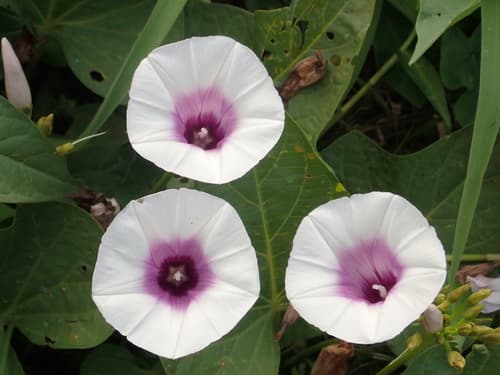
The sweet potato is a dicotyledonous plant belonging to the bindweed or morning glory family. It is a herbaceous perennial vine, grown for its large, starchy, sweet-tasting, tuberous roots. The plant produces heart-shaped or lobed leaves and funnel-shaped flowers, typically white with a purple throat, as seen in the image.