Strandveld Honeythorn
NameStrandveld Honeythorn
Scientific NameLycium ferocissimum
Common NamesStrandveld Honeythorn, African Boxthorn, Dune Kankerbos, Spiny Boxthorn
Plant FamilySolanaceae
Natural HabitatNative to coastal regions of South Africa, thriving in strandveld, fynbos, and thicket vegetation. It is highly tolerant of sandy soils, salt spray, and drought conditions.
Parts Usedfruit,leaf
Medicinal Actionsanalgesic, anti-inflammatory, antioxidant
Traditional UsesTraditionally, the fruits are consumed, and in some folk medicine practices, the plant has been used to address fever, pain, and inflammatory conditions. It is also sometimes used as a general tonic for well-being.
Active Constituentscarotenoids, polysaccharides, flavonoids, vitamins
Preparation Methodsinfusion, powder
Contraindications & WarningsGenerally considered safe when consumed as food, but potential for allergic reactions exists. No specific major contraindications are widely documented for medicinal use; however, caution is advised, especially during pregnancy or lactation, and with existing medical conditions.
Cultivation NotesThis hardy plant prefers full sun and well-drained soil, tolerating drought and salt spray. It can be propagated from seeds or cuttings and is known for its resilience in challenging coastal environments.
Raritycommon
Description
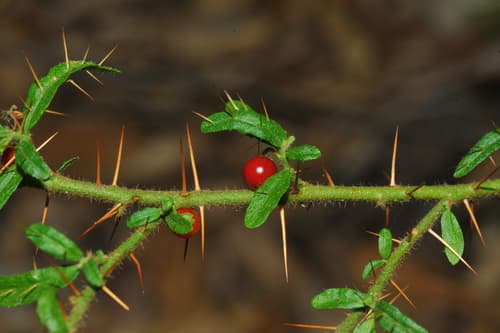
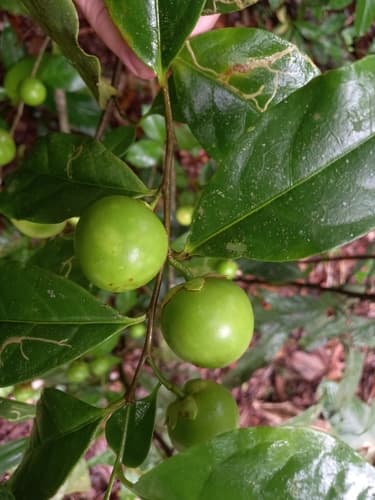
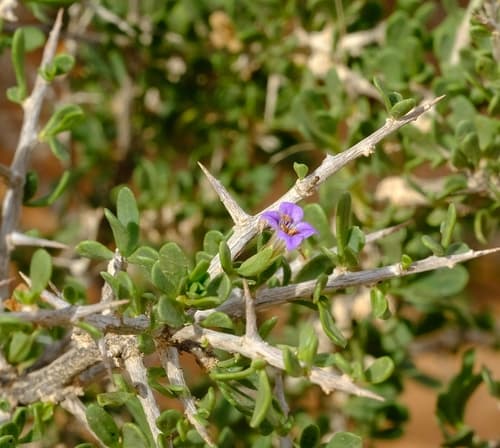
A dense, spiny, evergreen shrub or small tree, typically growing 1-4 meters tall. It features small, fleshy, obovate green leaves, prominent sharp thorns, and small, solitary, bell-shaped purple flowers that develop into small, round, orange-red berries.