Southwestern Groundcherry
NameSouthwestern Groundcherry
Scientific NamePhysalis hederifolia
Common NamesSouthwestern Groundcherry, Ivy-leaf Groundcherry
Plant FamilySolanaceae
Natural HabitatNative to the southwestern United States and northern Mexico, it thrives in dry, open habitats such as grasslands, disturbed areas, roadsides, and sandy or rocky soils.
Parts Usedfruit,leaf
Medicinal Actionsanti-inflammatory, antioxidant, diuretic
Traditional UsesTraditionally, the ripe fruits of Physalis species have been consumed for their nutritional value and sometimes used for fevers, pain, and as a diuretic. Poultices made from leaves or whole plants have been applied externally for skin ailments or inflammation.
Active ConstituentsPhysalins, Withanolides, Flavonoids, Carotenoids
Preparation Methodsinfusion, powder, poultice
Contraindications & WarningsUnripe fruits and other parts of the plant are toxic due to solanine-like alkaloids and should not be ingested. Pregnant or lactating women should avoid use. Individuals with nightshade allergies should exercise caution.
Cultivation NotesThis hardy perennial prefers full sun to partial shade and well-drained soil. It is drought-tolerant once established and can be propagated by seed or division.
Raritycommon
Description
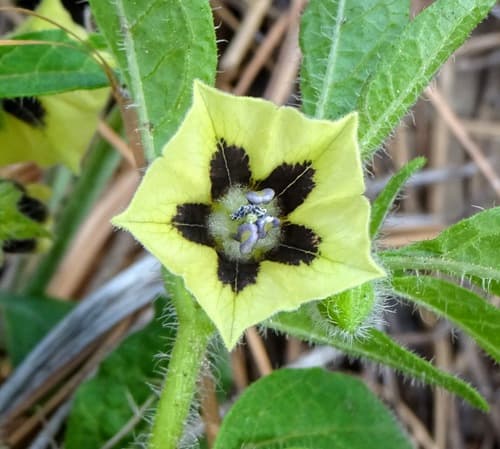
Physalis hederifolia is a herbaceous perennial characterized by its hairy stems and leaves. It produces distinctive pale yellow, bell-shaped flowers with a prominent dark purple or brown star-shaped blotch in the center. The fruit, a berry, develops encased within an inflated, papery calyx.