Solanum stupefactum
NameSolanum stupefactum
Scientific NameSolanum stupefactum
Plant FamilySolanaceae
Natural HabitatSpecific habitat for this species is unknown. However, members of the Solanum genus are widely distributed, often found in tropical to temperate regions, thriving in disturbed soils, open fields, and forest edges.
Parts Used
Traditional UsesNo specific traditional medicinal uses are documented for Solanum stupefactum. Due to the lack of information and the known toxicity of many species within the Solanum genus, this plant should not be used medicinally without definitive identification and expert guidance.
Active ConstituentsSpecific active constituents for Solanum stupefactum are unknown. However, many species in the Solanum genus contain steroidal glycoalkaloids (e.g., solanine, solamargine), which can be toxic.
Contraindications & WarningsDue to the lack of specific information and the known toxicity of many species within the Solanum genus, Solanum stupefactum should be considered potentially toxic. Ingestion or topical application is strongly contraindicated without definitive identification and safety data. Symptoms of Solanum poisoning can include gastrointestinal upset, neurological disturbances, and cardiac issues.
Cultivation NotesSpecific cultivation notes for Solanum stupefactum are unknown. Generally, Solanum species prefer full sun to partial shade, well-drained soil, and can be propagated by seed or cuttings.
Rarityvery-rare
Description
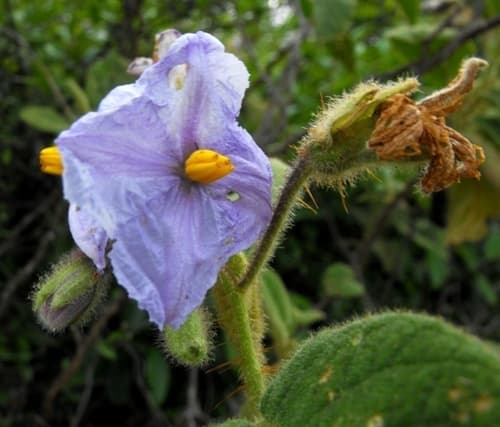
This plant features characteristic purple, star-shaped flowers with prominent yellow anthers, typical of the Solanum genus. Its stems are notably hairy and bear sharp prickles or thorns, and the leaves appear ovate and also hairy.