Solanum scabrifolium
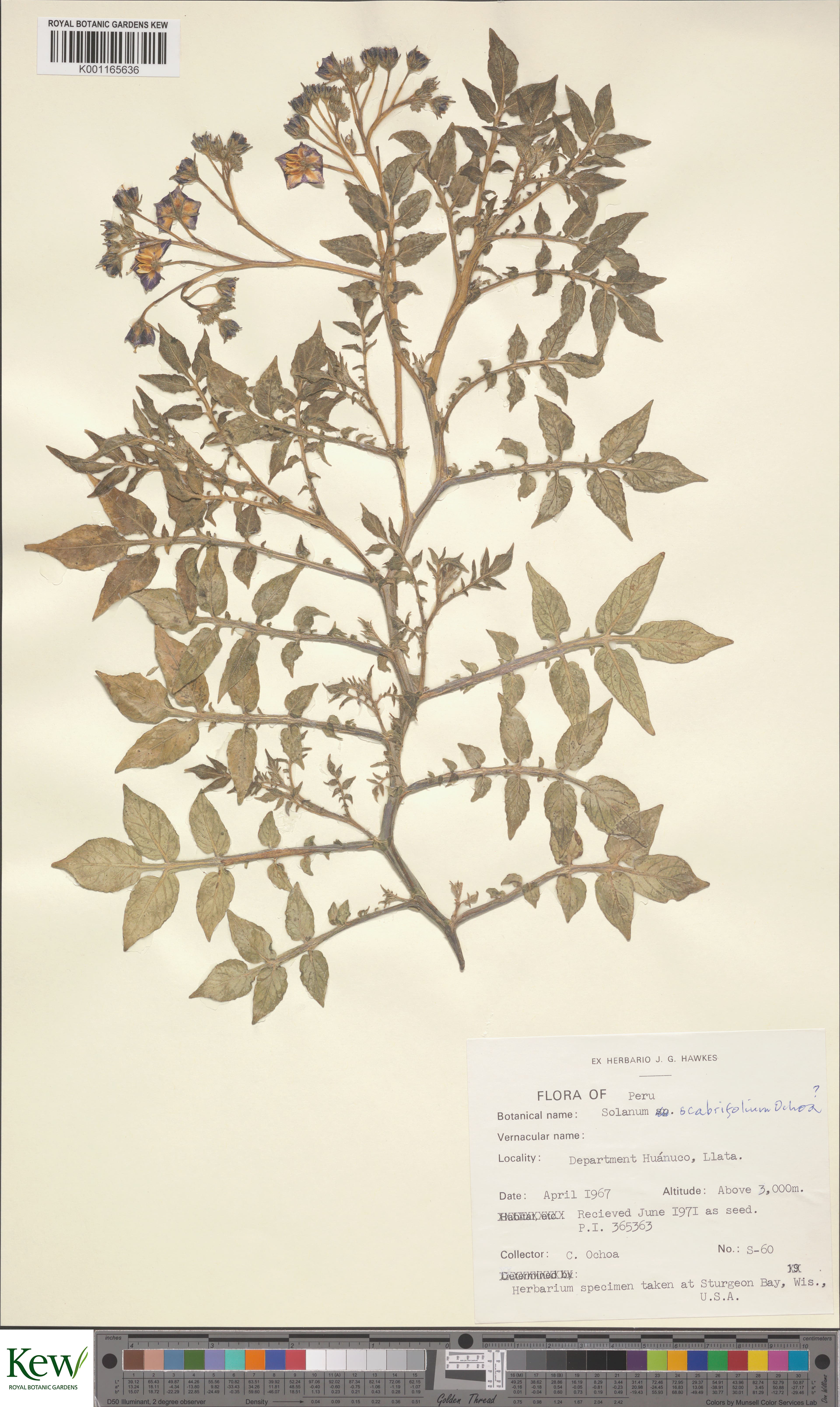
Image: Ochoa, C. (cc-by)
NameSolanum scabrifolium
Scientific NameSolanum scabrifolium Ochoa
Plant FamilySolanaceae
Natural HabitatNative to high-altitude regions of Peru, specifically documented from the Department of Huánuco, Llata, at altitudes above 3,000 meters.
Parts Usedroot,leaf,flower
Traditional UsesTraditional medicinal uses for Solanum scabrifolium are not widely documented. As a wild potato species, its tubers may have been used traditionally as a food source after detoxification processes to reduce naturally occurring glycoalkaloids. Direct medicinal application of aerial parts is generally not documented and should be approached with extreme caution due to potential toxicity common in the Solanum genus.
Active Constituentssteroidal glycoalkaloids
Contraindications & WarningsDue to the likely presence of toxic steroidal glycoalkaloids (e.g., solanine, chaconine) common in the Solanum genus, ingestion of raw plant parts is contraindicated. This plant should be considered potentially toxic and is not recommended for self-medication. Specific contraindications beyond general toxicity are not documented.
Cultivation NotesAs a wild potato species originating from high altitudes in Peru, Solanum scabrifolium likely thrives in cool temperatures, well-drained soil, and specific photoperiods conducive to tuberization. Cultivation would require conditions mimicking its native Andean habitat.
Rarityuncommon
Description
Solanum scabrifolium is a herbaceous plant, likely a wild potato species, characterized by its lobed leaves and clusters of purple and yellow flowers. The specimen shows a branching stem structure, and some parts appear to have fine hairs or prickles, typical of certain Solanum species.