Ipomoea carolina
NameIpomoea carolina
Scientific NameIpomoea cairica
Common NamesCairo Morning Glory, Five-leaved Morning Glory, Coast Morning Glory, Railway Creeper, Ipomoea carolina (misnomer/regional name)
Plant FamilyConvolvulaceae
Natural HabitatNative to tropical regions of Africa and Asia, this vine has naturalized widely in tropical and subtropical areas worldwide. It thrives in disturbed sites, roadsides, coastal dunes, and forest edges, often found scrambling over other vegetation.
Parts Usedleaf,whole_plant
Medicinal Actionsanti-inflammatory, antimicrobial, antioxidant
Traditional UsesIn some traditional medicine systems, particularly in Africa and Asia, the leaves are used externally as a poultice for skin conditions, wounds, and boils. Internally, it has been traditionally used as a mild laxative or for fevers, though such uses require caution due to potential toxicity.
Active ConstituentsFlavonoids, Phenolic compounds, Alkaloids, Triterpenes, Saponins
Preparation Methodsinfusion, decoction, poultice
Contraindications & WarningsIngestion of large quantities may cause purgative effects, nausea, or other gastrointestinal upset. As with many Ipomoea species, caution is advised for internal use. Pregnant and breastfeeding women, and individuals with gastrointestinal issues should avoid internal consumption.
Cultivation NotesA fast-growing, vigorous vine that prefers full sun to partial shade and well-drained soil. It is drought-tolerant once established and can be propagated by seeds or cuttings. It can become invasive in suitable warm climates.
Raritycommon
Description
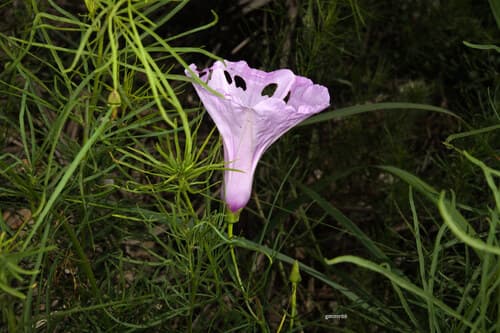
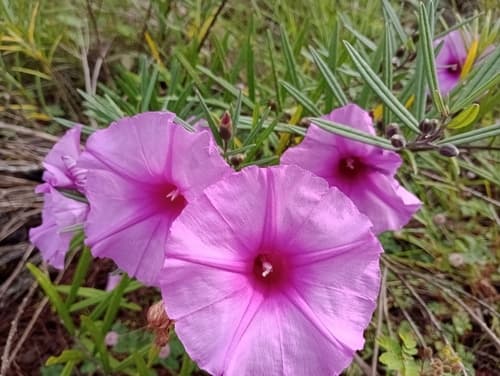
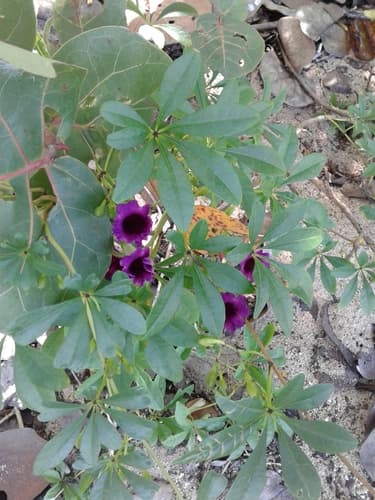
A vigorous perennial climbing vine, often identified as Ipomoea cairica, despite being referred to as Ipomoea carolina in some contexts. It features deeply palmately lobed leaves, typically with 5-7 segments, and showy, trumpet-shaped purple flowers.