Solanum pachyneurum
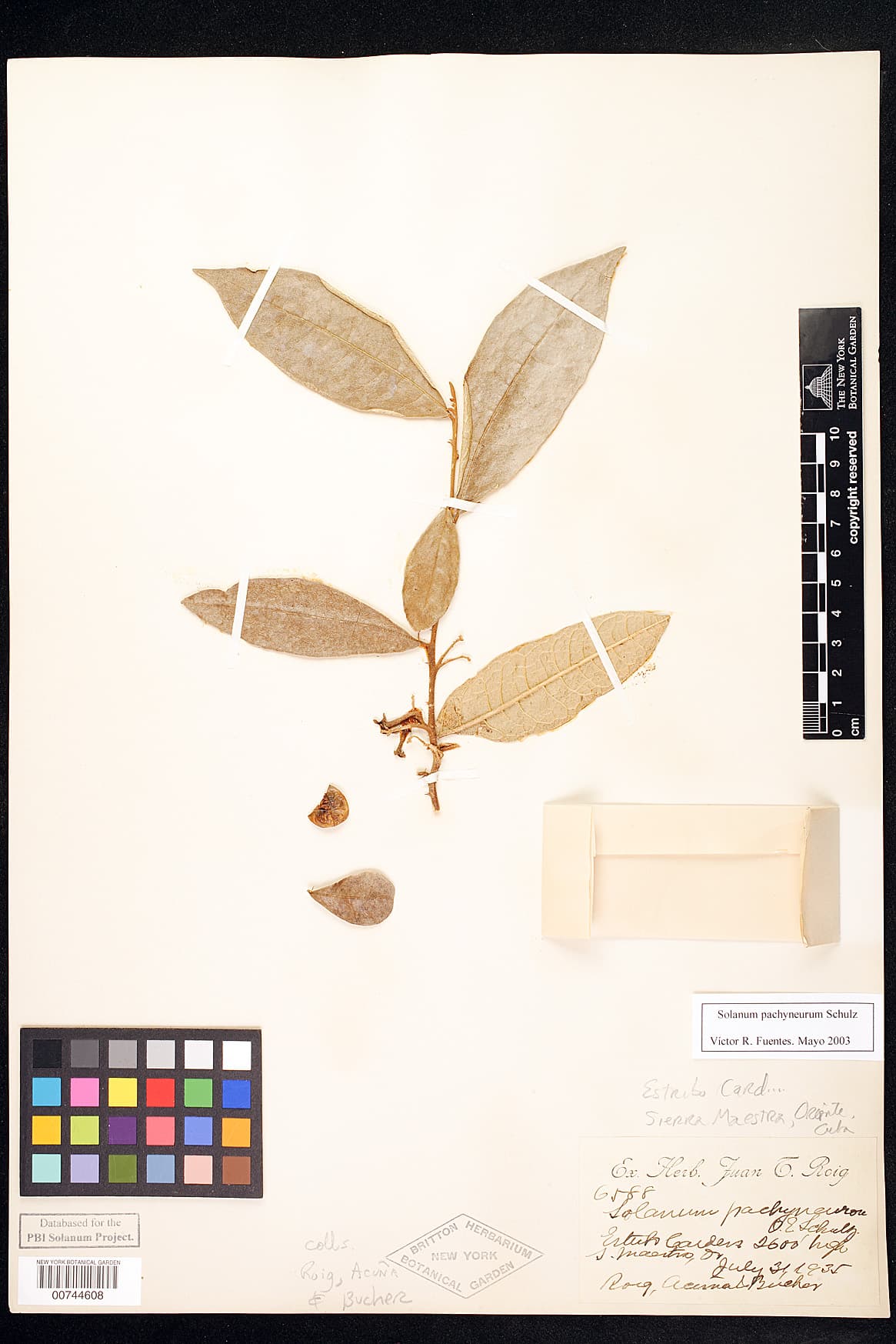
Image: The New York Botanical Garden (cc-by)
NameSolanum pachyneurum
Scientific NameSolanum pachyneurum O.E.Schulz
Plant FamilySolanaceae
Natural HabitatThis species is known to inhabit mountainous regions, specifically documented from Sierra Maestra, Oriente, Cuba, at elevations around 2600 feet (approximately 790 meters). It likely thrives in tropical or subtropical montane environments.
Parts Usedleaf,fruit
Traditional UsesNo traditional medicinal uses are documented or known from the provided information for Solanum pachyneurum. The genus Solanum is diverse, containing both edible and highly toxic species, some with documented medicinal applications.
Contraindications & WarningsUnknown, as specific medicinal uses and active constituents for Solanum pachyneurum are not documented. Many species within the Solanum genus contain steroidal glycoalkaloids (e.g., solanine), which can be toxic if ingested, and caution should be exercised.
Cultivation NotesNo specific cultivation notes are available for this species. Given its natural habitat, it likely prefers warm, humid conditions typical of tropical montane forests.
Rarityuncommon
Description
Solanum pachyneurum is a species characterized by its woody stem and relatively large, ovate to elliptic leaves, which appear somewhat leathery with prominent venation. The specimen includes dried leaves and a small, dried fruit, suggesting it is a shrub or small tree.