Solanum nubicola
Image: Conveyor Belt (cc0)
NameSolanum nubicola
Scientific NameSolanum nubicola Ochoa
Plant FamilySolanaceae
Natural HabitatFound in the Punas of Quishuarapata, Peru, at 3600 meters altitude, specifically in small wooded ravines formed by Polylepis trees, indicating a high-altitude Andean environment.
Parts Usedroot,fruit
Medicinal Actionsanti-inflammatory, antimicrobial, antioxidant
Traditional UsesSpecific traditional medicinal uses for *Solanum nubicola* are not detailed in the provided information. Many wild *Solanum* species are known for their edible tubers, but some also contain glycoalkaloids which can be toxic and require specific preparation for consumption or medicinal application.
Active ConstituentsGlycoalkaloids
Preparation Methodspowder
Contraindications & WarningsDue to the presence of glycoalkaloids common in the Solanum genus, consumption of raw or improperly prepared plant parts, especially tubers and fruits, can lead to toxicity. Symptoms may include gastrointestinal upset, neurological effects, and in severe cases, be life-threatening.
Cultivation NotesThis species thrives in high-altitude, cool environments, typical of Andean punas and wooded ravines. It likely requires well-drained soil and may tolerate partial shade, similar to its natural habitat among Polylepis trees.
Rarityuncommon
Description
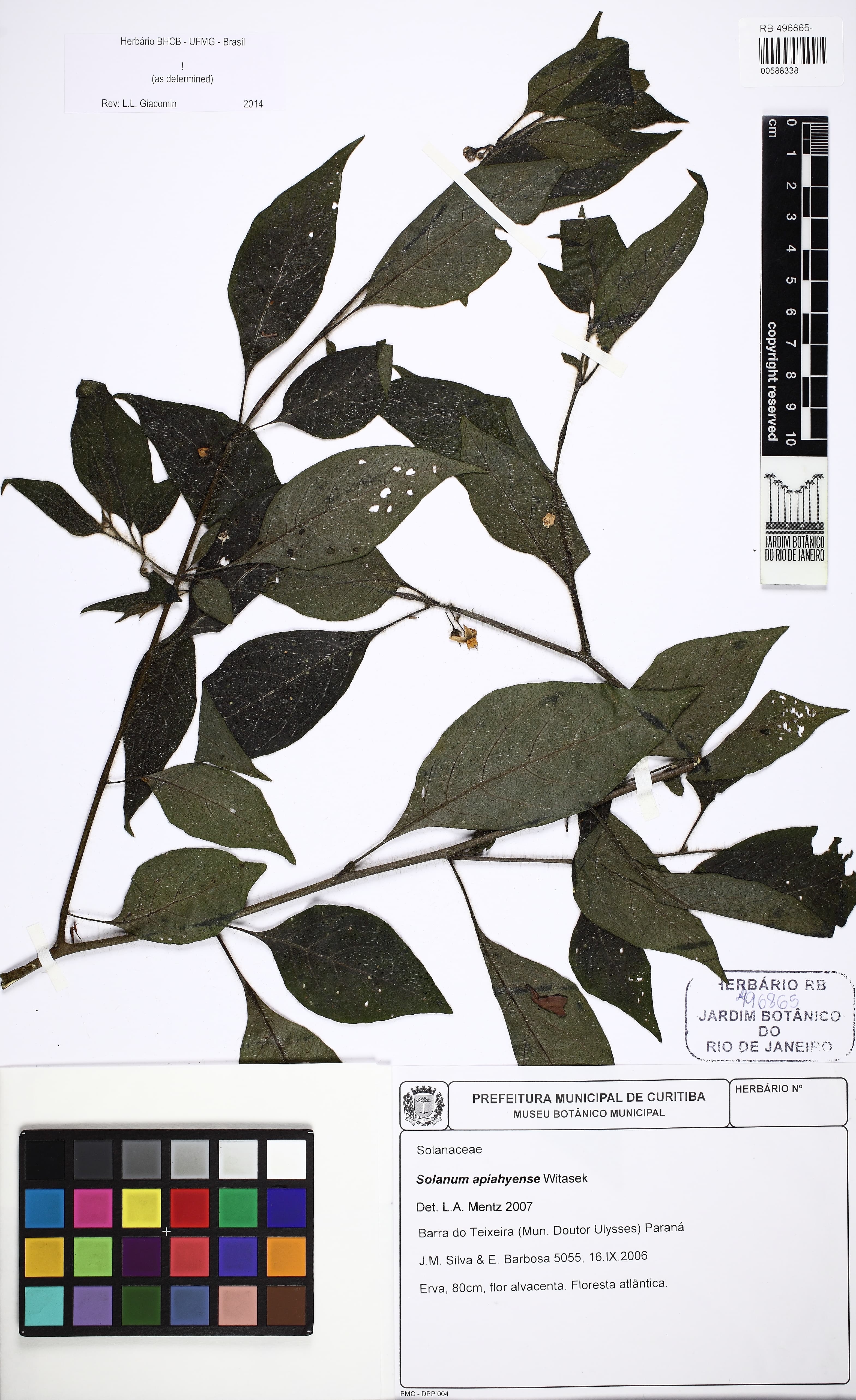
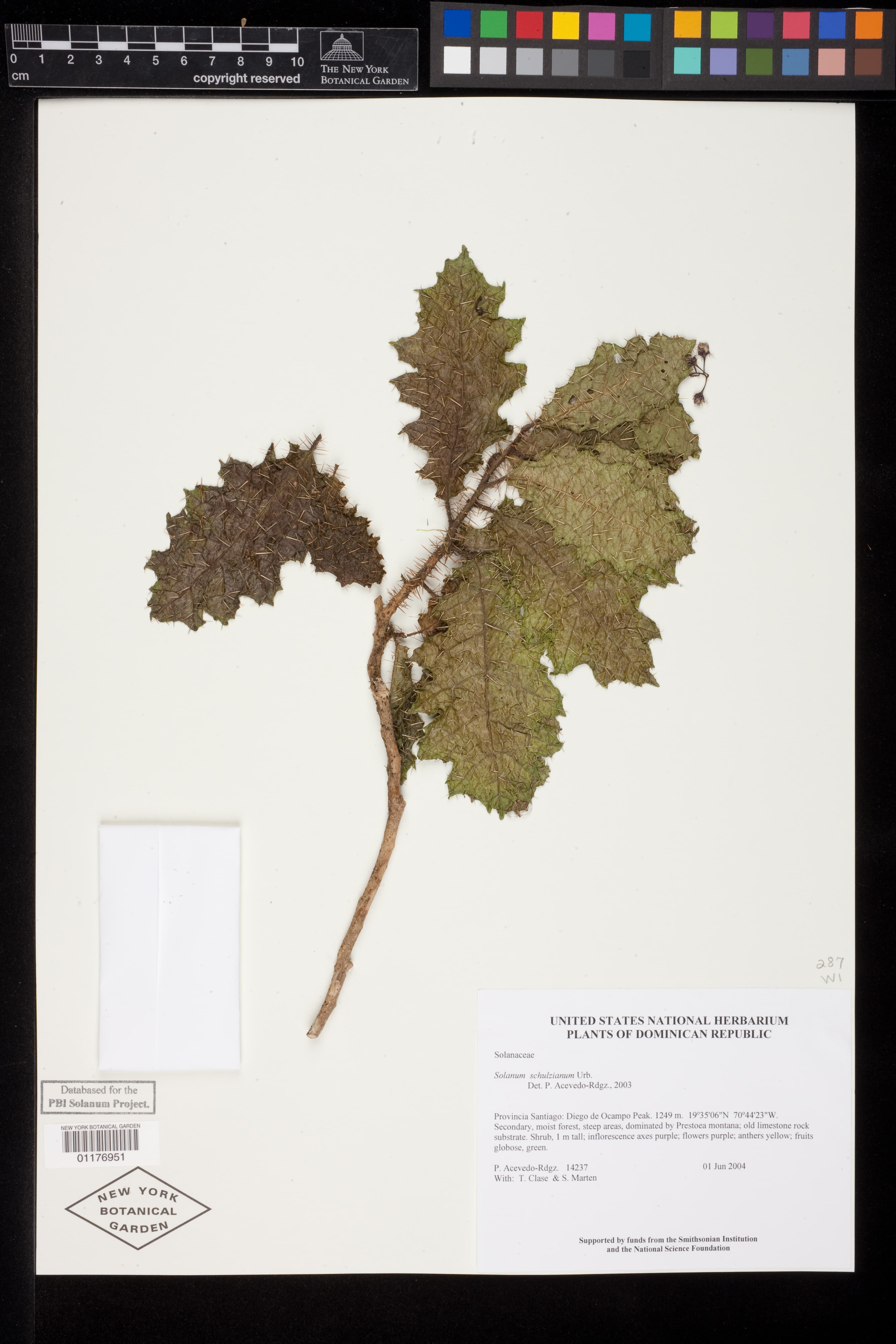
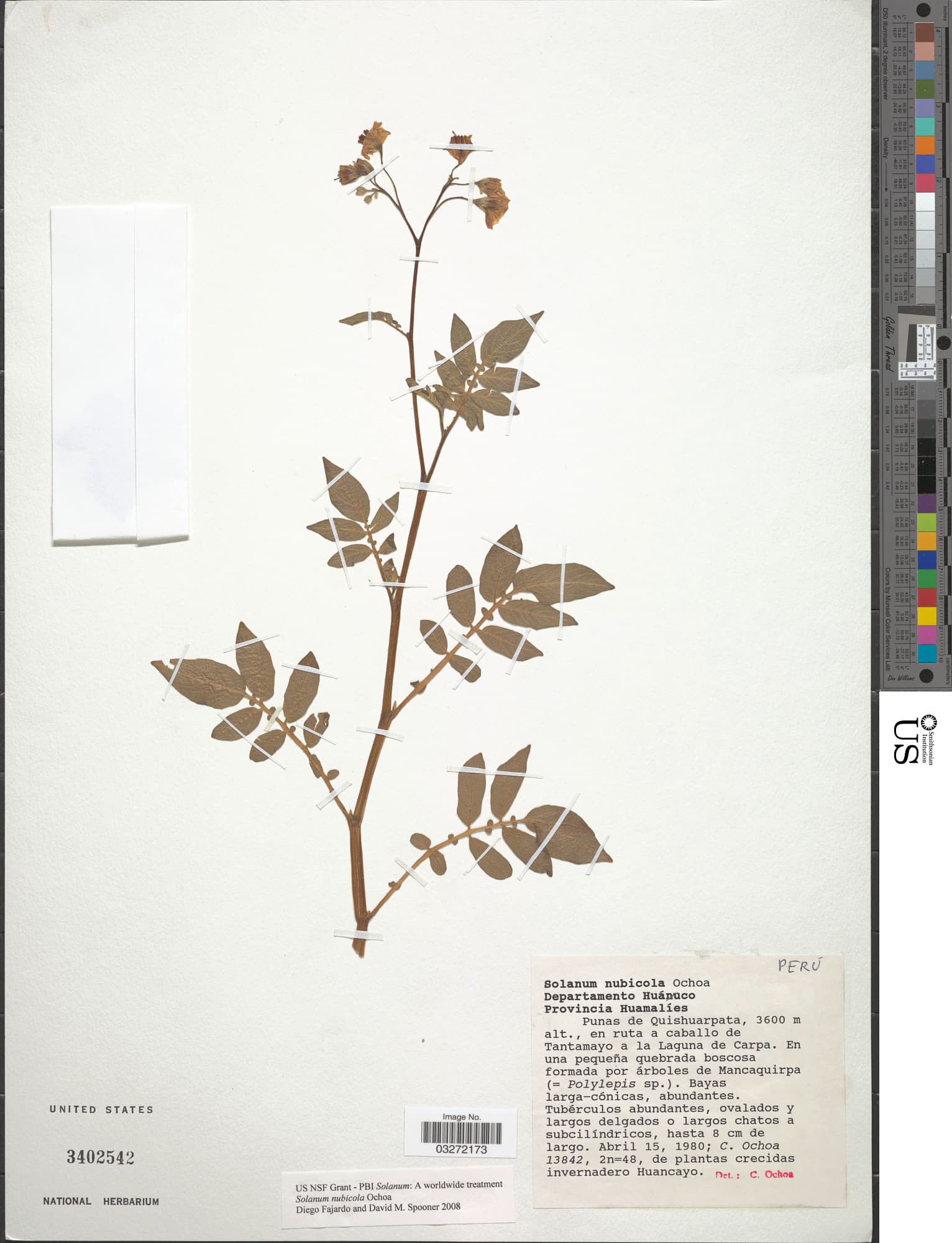
A wild potato species characterized by abundant, long-conical berries and oval to subcylindrical tubers up to 8 cm long. The herbarium specimen shows a branched stem with simple, alternate leaves and terminal inflorescences.