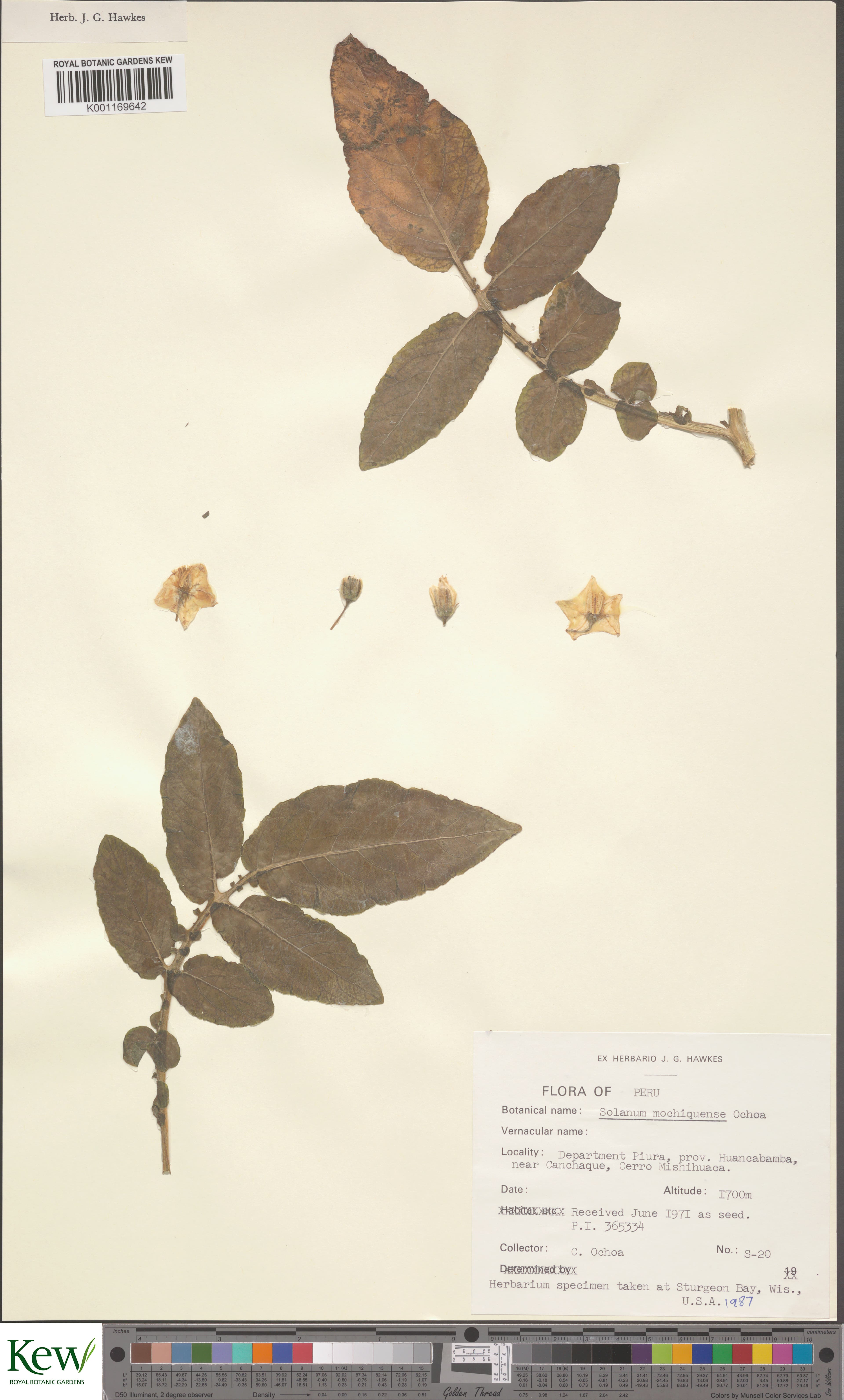
Solanum mochiquense
Image: Ochoa, C. (cc-by)
NameSolanum mochiquense
Scientific NameSolanum mochiquense Ochoa
Plant FamilySolanaceae
Natural HabitatNative to the high-altitude Andean regions of Peru, specifically found in areas such as Piura Department, Huancabamba province, near Canchaque and Cerro Mishihuaca, at elevations around 1700 meters. It thrives in montane environments.
Parts Usedwhole_plant
Medicinal Actionsanti-inflammatory, antimicrobial
Traditional UsesNo specific traditional medicinal uses for Solanum mochiquense are widely documented. As a wild potato species, its primary interest lies in its genetic resources for agricultural breeding programs. Many Solanum species, including wild potatoes, contain glycoalkaloids which are generally considered toxic.
Active ConstituentsGlycoalkaloids
Preparation Methodspowder
Contraindications & WarningsDue to the likely presence of toxic glycoalkaloids, ingestion of Solanum mochiquense is not recommended. Glycoalkaloid poisoning can cause severe gastrointestinal distress, neurological symptoms, and can be fatal in high doses. Avoid internal use.
Cultivation NotesThis species can be propagated from seed. It is adapted to montane climates and likely prefers cool, well-drained soils, similar to other wild potato relatives. Cultivation is primarily for research and genetic conservation rather than direct medicinal or food use.
Rarityuncommon
Description
Solanum mochiquense is a perennial herbaceous plant belonging to the wild potato group within the Solanum genus. It is characterized by ovate to elliptical leaves with entire margins and produces small, star-shaped flowers typical of its genus.