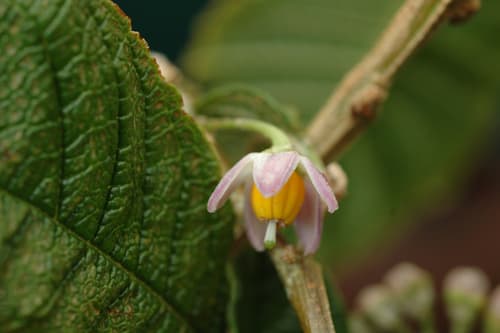
Solanum maturecalvans
NameSolanum maturecalvans
Scientific NameSolanum maturecalvans
Plant FamilySolanaceae
Natural HabitatNative to South America, particularly Brazil, where it is found in tropical and subtropical regions. It commonly grows in disturbed areas, forest edges, and secondary growth, preferring warm and humid conditions.
Parts Usedleaf,fruit
Medicinal Actionsanti-inflammatory, antimicrobial
Traditional UsesSpecific traditional medicinal uses for Solanum maturecalvans are not widely documented in ethnobotanical literature. However, many species within the Solanum genus are known to contain steroidal glycoalkaloids, some of which have been traditionally employed for their purported anti-inflammatory and antimicrobial properties. Any use of this specific species should be approached with extreme caution due to the potential for toxicity inherent in the genus.
Active ConstituentsSteroidal glycoalkaloids, Flavonoids
Preparation Methodspoultice, powder
Contraindications & WarningsDue to the presence of potentially toxic steroidal glycoalkaloids common in the Solanum genus, Solanum maturecalvans should be considered potentially toxic. Specific contraindications for this species are not well-documented, but general warnings for Solanum species include avoiding internal consumption, especially during pregnancy, lactation, or in individuals with liver or kidney conditions. External use should also be approached with caution. Always consult a qualified expert before any use.
Cultivation NotesAs a tropical/subtropical shrub, Solanum maturecalvans thrives in warm, humid environments with well-drained soil. It can tolerate some disturbance and partial shade, consistent with its natural habitat in forest edges and secondary growth. Propagation is typically by seed.
Rarityuncommon
Description
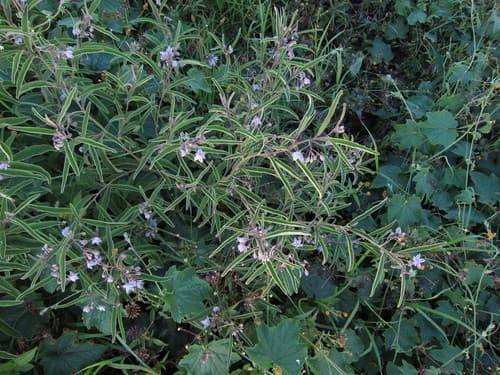
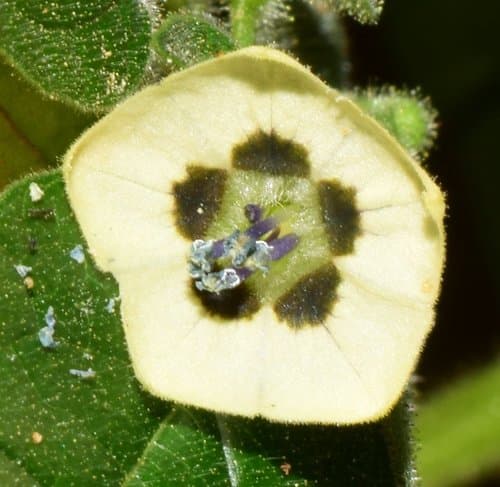
This plant is a species within the Solanum genus, typically growing as a shrub or small tree. It is characterized by its textured, often hairy leaves and small flowers featuring pale pink to purplish petals surrounding a prominent yellow anther cone. The plant produces berries as its fruit.