Solanum macrotonum
NameSolanum macrotonum
Scientific NameSolanum macrotonum
Common NamesWild Nightshade, South American Nightshade
Plant FamilySolanaceae
Natural HabitatNative to South America, it typically grows in disturbed areas, forest margins, and as a weed in agricultural fields, preferring sunny locations and well-drained soil.
Parts Usedleaf,fruit
Medicinal Actionsanalgesic, anti-inflammatory, antimicrobial
Traditional UsesWhile specific medicinal uses for Solanum macrotonum are not widely documented, other closely related wild Solanum species have been traditionally used externally as poultices for skin inflammations, boils, and for pain relief. Internal use of most wild Solanum species is generally discouraged due to high toxicity.
Active Constituentssteroidal glycoalkaloids (e.g., solanine, solamargine, solasonine), flavonoids, phenolic compounds
Preparation Methodspoultice, decoction
Contraindications & WarningsThis plant is considered highly toxic; internal consumption is dangerous and can be fatal due to the presence of steroidal glycoalkaloids. Avoid use during pregnancy, lactation, and in children. Do not use if liver or kidney conditions are present, and exercise extreme caution with any external application.
Cultivation NotesSolanum macrotonum is often found as a wild plant or weed. It prefers full sun to partial shade and well-drained soil. It can be easily propagated by seed and is generally resilient in its native habitat.
Raritycommon
Description
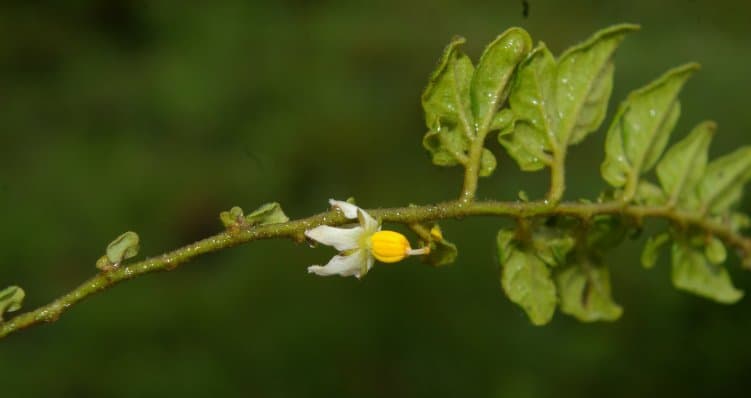
A herbaceous plant characterized by its simple, often hairy leaves and star-shaped white flowers with prominent yellow anthers. It produces small, green berries that mature to a darker color, typical of the nightshade family.