Solanum innoxium
NameSolanum innoxium
Scientific NameSolanum innoxium
Common NamesSilverleaf Nightshade, Silver-leaved Nightshade, White Horse Nettle, Trompillo, Solanum elaeagnifolium
Plant FamilySolanaceae
Natural HabitatNative to the Americas, particularly the southwestern United States, Mexico, and South America. It thrives in disturbed areas, pastures, roadsides, and agricultural fields, often considered a weed, preferring dry, sandy, or gravelly soils.
Parts Usedroot,fruit
Medicinal Actionsanalgesic, anti-inflammatory, antimicrobial
Traditional UsesTraditionally, some indigenous groups have used the plant, particularly the root, for pain relief and as an anti-inflammatory agent, often applied externally. The fruits have been used in some cultures as a purgative or emetic, but this is highly dangerous due to toxicity. It has also been used in some folk medicine for skin conditions and as a diuretic.
Active ConstituentsSteroidal glycoalkaloids (solasodine, solamargine, solanine), saponins, flavonoids
Preparation Methodspoultice, decoction, powder
Contraindications & WarningsALL parts of Solanum innoxium are considered toxic, especially the berries, due to steroidal glycoalkaloids. Ingestion can cause severe gastrointestinal upset, neurological symptoms, and can be fatal, particularly in livestock and children. Not recommended for internal use without expert supervision. Avoid during pregnancy and lactation.
Cultivation NotesSolanum innoxium is generally considered a noxious weed in many regions due to its aggressive growth and toxicity. It is easily propagated by seed and root fragments, making it difficult to eradicate. It prefers full sun and well-drained soil and is drought-tolerant. Cultivation for medicinal purposes is not generally recommended due to its toxicity and weed status.
Raritycommon
Description
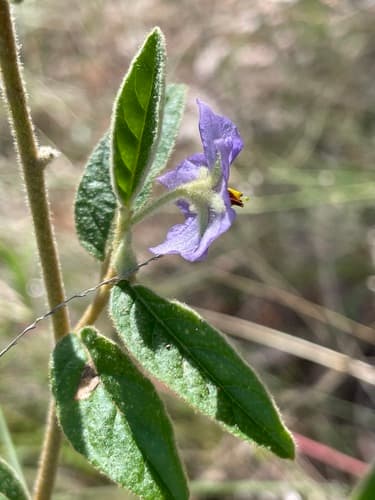
Solanum innoxium (syn. Solanum elaeagnifolium) is a perennial herbaceous plant characterized by its silvery-green, lanceolate leaves covered in dense, star-shaped hairs. It produces distinctive purple, star-shaped flowers with prominent yellow anthers, often followed by yellow or orange berries.