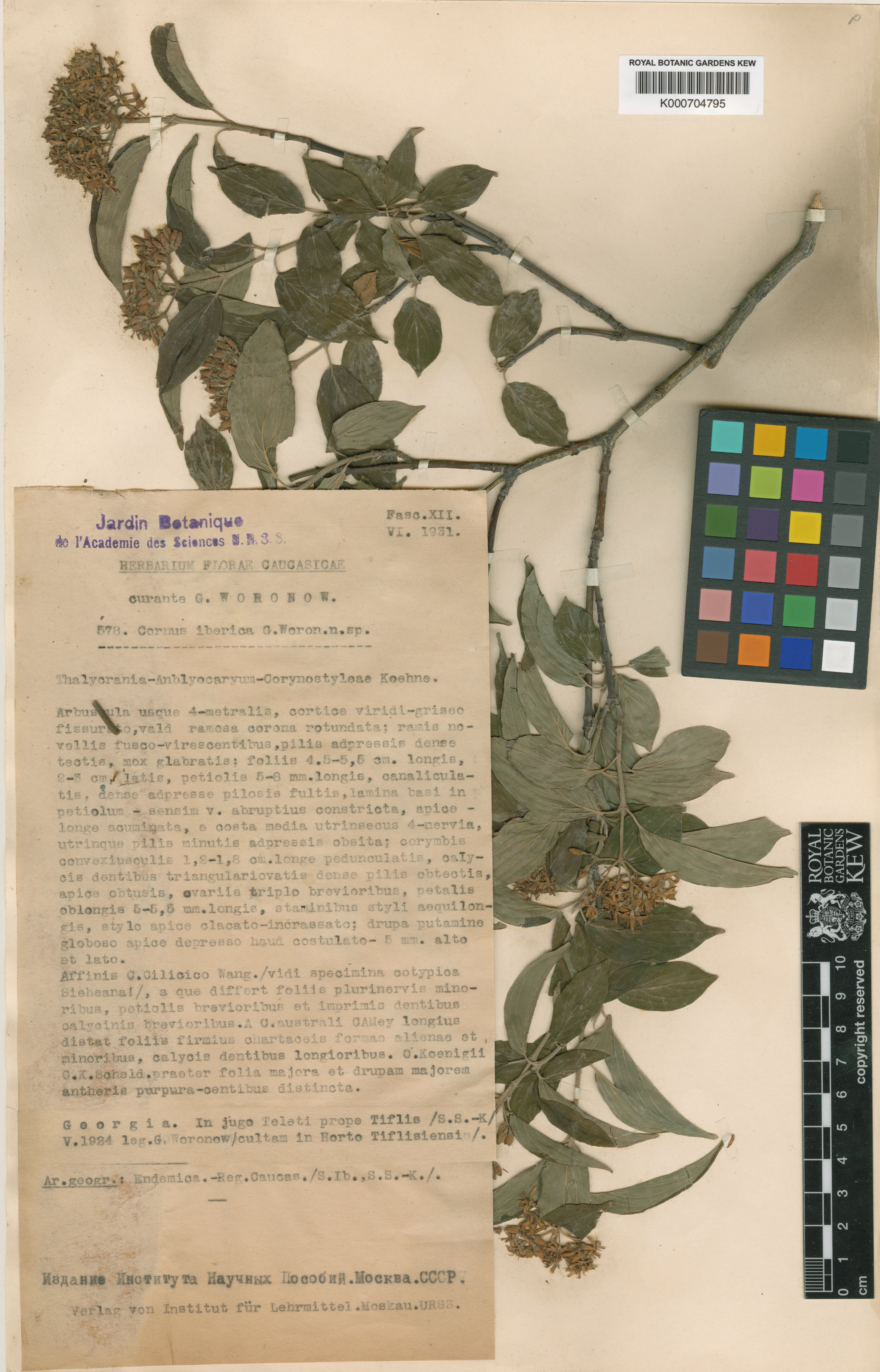
Cornus iberica
Image: Woronow, G. (cc-by)
NameCornus iberica
Scientific NameCornus iberica
Plant FamilyCornaceae
Natural HabitatThis species is endemic to the Caucasus region, specifically found in Georgia, as indicated by the collection notes near Tiflis (Tbilisi). It thrives in temperate environments typical of this mountainous region.
Parts Usedleaf,bark,fruit
Medicinal Actionsastringent, anti-inflammatory, antioxidant
Traditional UsesWhile specific traditional uses for Cornus iberica are not widely documented, other species within the genus Cornus have historically been utilized. The bark of many dogwood species is known for its astringent properties, traditionally used to treat fevers, diarrhea, and as a general tonic. The fruits of some Cornus species are also edible.
Active Constituentstannins, iridoids, flavonoids
Preparation Methodsdecoction, infusion, powder
Contraindications & WarningsSpecific contraindications for Cornus iberica are not well-established. However, general precautions for Cornus species include potential gastrointestinal upset with excessive consumption of bark preparations due to high tannin content. Pregnant or breastfeeding individuals should consult a healthcare professional.
Cultivation NotesAs an endemic species from the Caucasus, Cornus iberica likely prefers temperate climates with well-drained soil. It would probably thrive in conditions ranging from partial shade to full sun, similar to many other Cornus species, and may be adaptable to various soil types.
Rarityuncommon
Description
Cornus iberica is a shrub growing up to 4 meters tall, characterized by fissured greenish-gray bark and a densely branched, rounded crown. Its leaves are 2-3 cm wide, with petioles 5-8 mm long, and are acuminate at the apex, covered with minute appressed hairs along the midrib. The plant produces long-stalked corymbs of flowers and drupes with ribbed stones.