Solanum dolichosepalum
NameSolanum dolichosepalum
Scientific NameSolanum dolichosepalum
Common NamesNone widely known
Plant FamilySolanaceae
Natural HabitatNative to South America, particularly Brazil, where it typically grows in disturbed areas, forest edges, or open woodlands in tropical and subtropical climates.
Parts Usedleaf,fruit
Medicinal Actionsanti-inflammatory, antimicrobial, analgesic
Traditional UsesSpecific traditional medicinal uses for Solanum dolichosepalum are not well-documented in common ethnobotanical literature. However, within the Solanum genus, various species are traditionally used for their anti-inflammatory and antimicrobial properties, often applied topically for skin conditions or internally for pain relief, though always with caution due to potential toxicity.
Active Constituentssteroidal glycoalkaloids
Preparation Methodspoultice, decoction
Contraindications & WarningsAs with many species in the Solanum genus, Solanum dolichosepalum likely contains steroidal glycoalkaloids, which can be toxic, especially in unripe fruits or high doses. Ingestion should be avoided without expert guidance. Pregnant or breastfeeding women and individuals with pre-existing conditions should exercise extreme caution.
Cultivation NotesThis species thrives in warm, tropical to subtropical climates with well-drained soil and full sun to partial shade. It can be propagated from seed or cuttings and requires consistent moisture, especially during establishment.
Rarityuncommon
Description
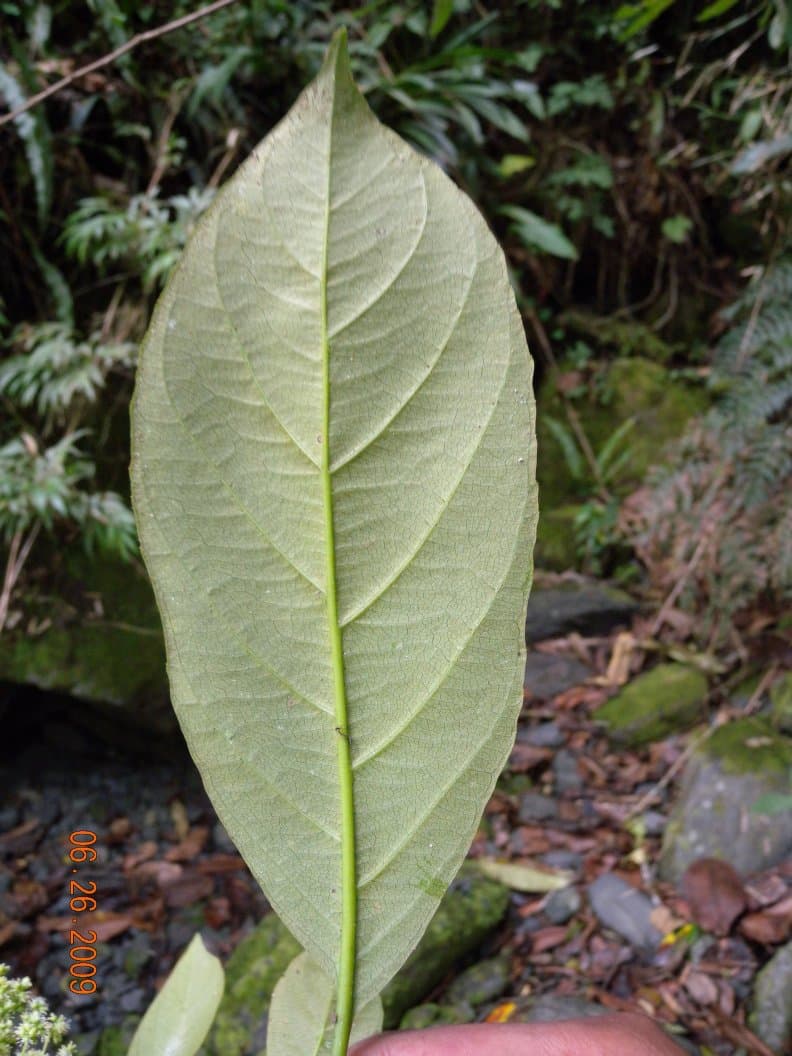
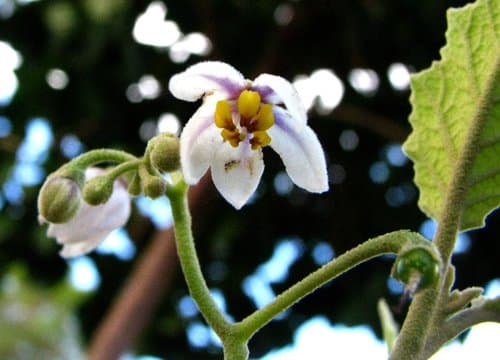
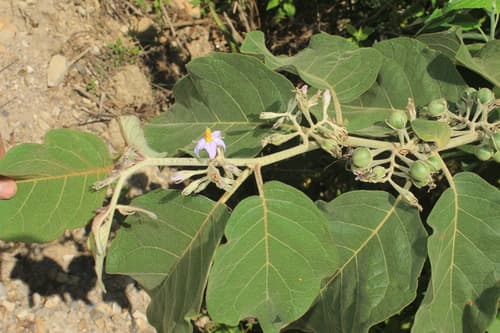
Solanum dolichosepalum is a shrubby plant characterized by large, ovate to elliptic leaves, often with a somewhat velvety or hairy texture. It produces clusters of light purple, star-shaped flowers with prominent yellow anthers, followed by small, spherical green fruits that mature to a different color (often yellow or orange, though not visible in the image).