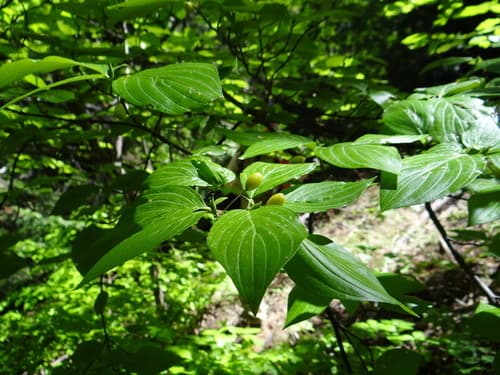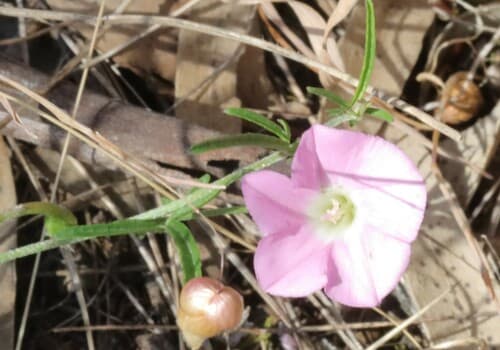
Solanum dichroandrum
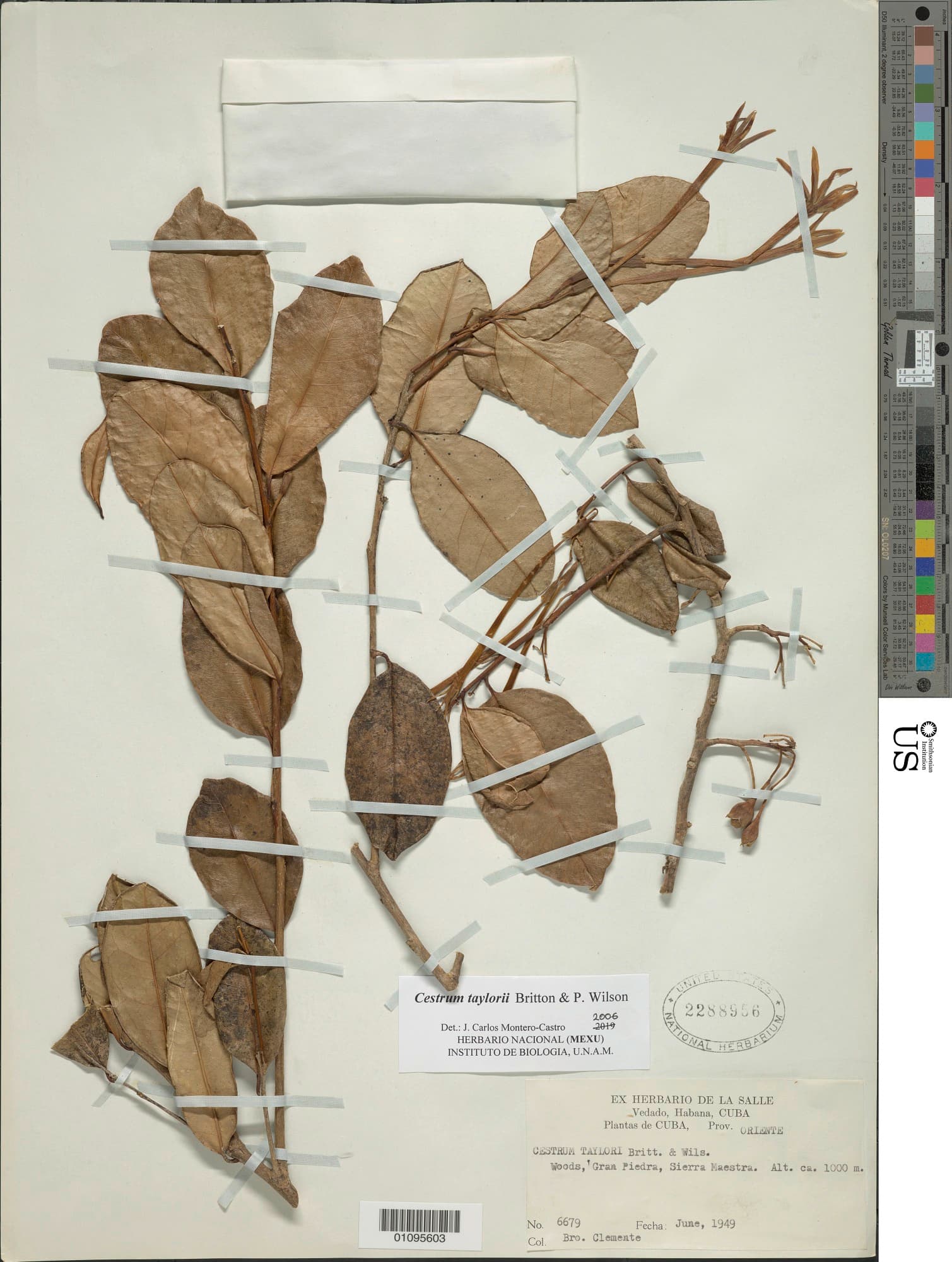
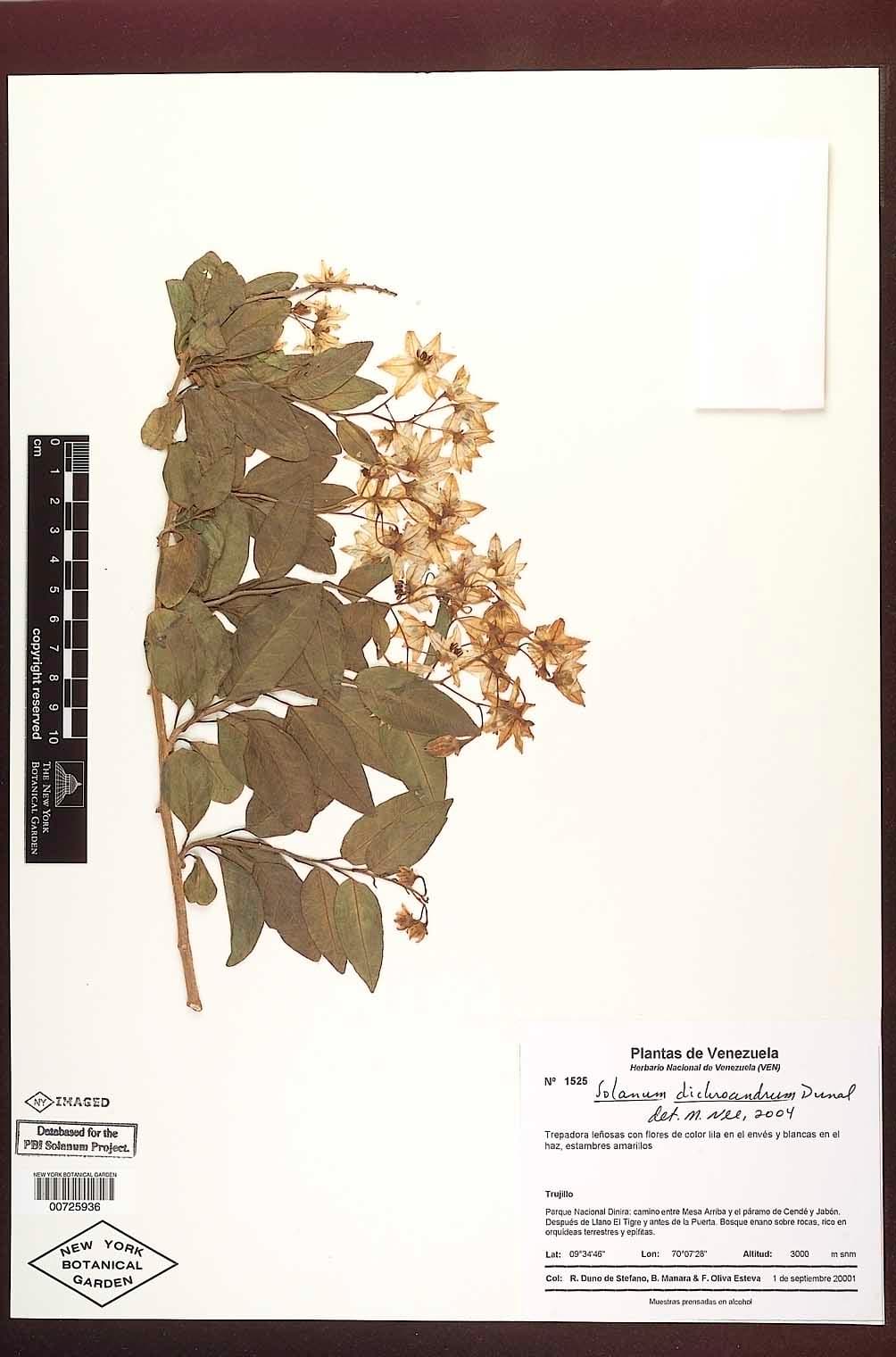
Image: The New York Botanical Garden (cc-by)
NameSolanum dichroandrum
Scientific NameSolanum dichroandrum Dunal
Plant FamilySolanaceae
Natural HabitatThis species is found in high-altitude environments, specifically in dwarf forests on rocky terrain, rich in terrestrial and epiphytic orchids. The specimen was collected in Dinira National Park, Venezuela, at an altitude of 3000 meters, along a road between Mesa Arriba and the páramo of Cendé and Jabón.
Parts Used
Traditional UsesNo widely documented traditional medicinal uses for Solanum dichroandrum are available in ethnobotanical literature. Many species within the Solanum genus contain steroidal glycoalkaloids, which can be toxic, and thus internal use is generally not recommended without expert guidance.
Active ConstituentsSteroidal glycoalkaloids (likely, common in Solanum genus)
Contraindications & WarningsDue to the lack of documented medicinal uses and the potential presence of toxic steroidal glycoalkaloids common in the Solanum genus, internal consumption is strongly contraindicated. External use should also be approached with extreme caution, if at all. Not recommended for use by pregnant or lactating individuals, or children.
Cultivation NotesCultivation would likely require conditions mimicking its natural high-altitude habitat, including well-drained, rocky soil, cooler temperatures, and specific light conditions typical of a dwarf forest environment. As a woody climber, it would benefit from support structures.
Rarityuncommon
Description
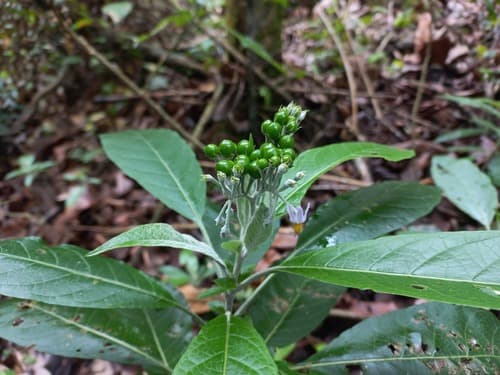
Solanum dichroandrum is a woody climbing vine characterized by ovate leaves and clusters of star-shaped flowers. The flowers are described as having a white upper surface and a lilac underside, with prominent yellow stamens, though these colors may be faded in dried specimens.