Solanum cylindricum
NameSolanum cylindricum
Scientific NameSolanum cylindricum Vell.
Common NamesCylindrical Nightshade, Nightshade
Plant FamilySolanaceae
Natural HabitatNative to South America, particularly Brazil, Paraguay, and Argentina, growing in various environments including forests, disturbed areas, and along roadsides in humid to semi-humid regions.
Parts Usedleaf,fruit
Medicinal Actionsanti-inflammatory, analgesic, antimicrobial
Traditional UsesWhile specific traditional uses for Solanum cylindricum are not widely documented in general ethnobotanical literature, other Solanum species are traditionally used for pain relief, reducing inflammation, treating skin conditions, and as febrifuges. Due to the presence of potentially toxic alkaloids, internal use is often approached with extreme caution or avoided.
Active Constituentssteroidal glycoalkaloids, solasodine, flavonoids
Preparation Methodspoultice, decoction, tincture
Contraindications & WarningsPregnancy, lactation, children, individuals with liver or kidney conditions, and those taking CNS depressants or anticholinergic medications. Internal use is generally not recommended due to potential toxicity from glycoalkaloids.
Cultivation NotesPrefers full sun to partial shade and well-drained soil. It is relatively hardy in its native tropical and subtropical climate, requiring moderate watering. Propagated by seeds or cuttings.
Raritycommon
Description
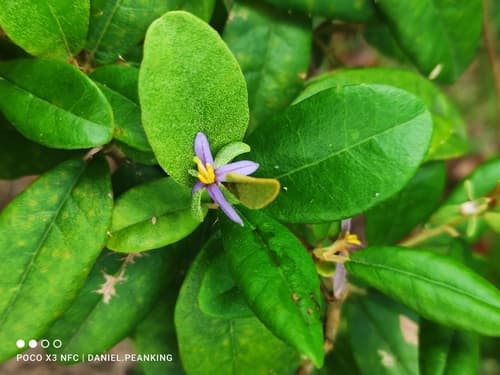
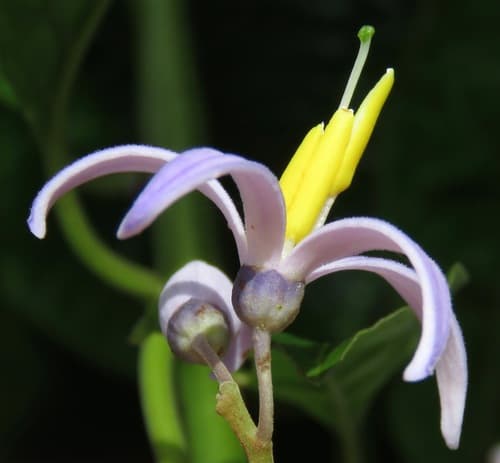
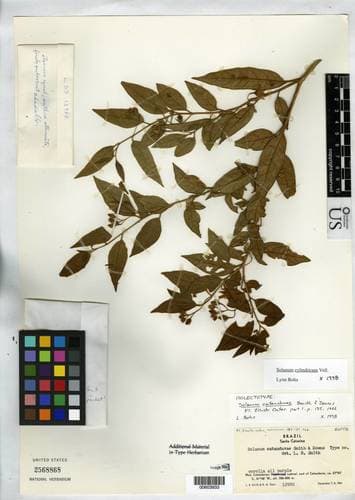
Solanum cylindricum is a woody shrub or small tree, typically 1-3 meters tall, characterized by simple, alternate, elliptic to lanceolate leaves. It produces small clusters of flowers, followed by spherical berries.