Solanum cunninghamii
NameSolanum cunninghamii
Scientific NameSolanum cunninghamii
Common NamesCunningham's Solanum, Desert Nightshade
Plant FamilySolanaceae
Natural HabitatNative to arid and semi-arid regions of Western Australia and the Northern Territory, commonly found in sandy soils, spinifex grasslands, and open woodlands.
Parts Used
Traditional UsesWhile various *Solanum* species have traditional uses among Indigenous Australians, specific medicinal applications for *Solanum cunninghamii* are not widely documented in public ethnobotanical literature. Some *Solanum* species fruits, often referred to as 'bush tomatoes,' are consumed after careful preparation to mitigate potential toxicity.
Active ConstituentsSteroidal glycoalkaloids (e.g., solasodine, solamargine, solasonine)
Contraindications & WarningsAll parts of *Solanum cunninghamii*, like many species in the *Solanum* genus, should be treated with extreme caution due to the presence of potentially toxic steroidal glycoalkaloids. Ingestion, especially of unripe fruits or large quantities, can cause gastrointestinal upset, neurological symptoms, and other adverse effects. Not recommended for internal use without expert guidance.
Cultivation NotesThis drought-tolerant shrub thrives in full sun and well-drained, sandy soils. It is typically propagated from seed and requires minimal care once established in suitable arid or semi-arid environments.
Raritycommon
Description
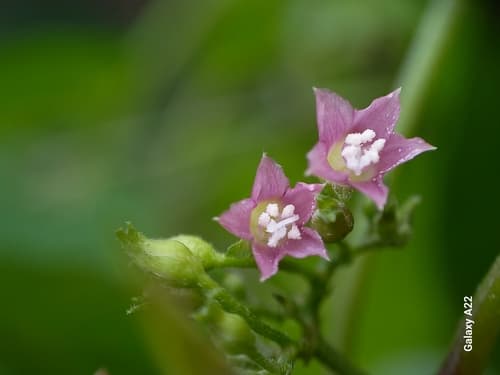
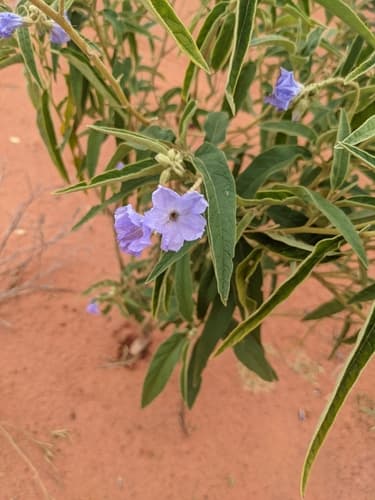
An erect, spreading shrub typically growing 1-3 meters tall, featuring narrow, lanceolate leaves and pale purple, star-shaped flowers. It produces small, spherical fruits that ripen from green to yellow or orange.