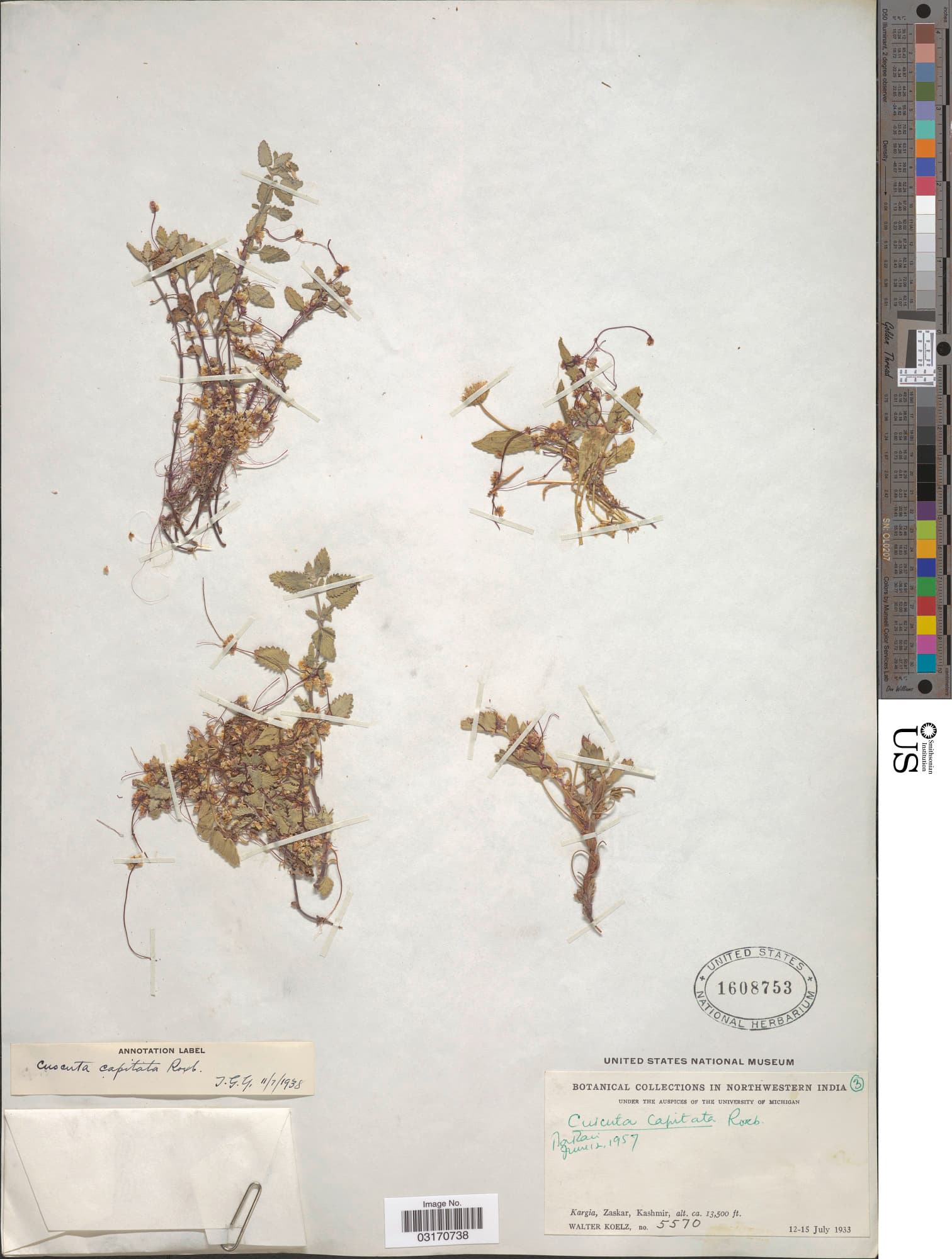
Cuscuta capitata
Image: Conveyor Belt (cc0)
NameCuscuta capitata
Scientific NameCuscuta capitata Roxb.
Common NamesDodder, Love Vine, Strangleweed
Plant FamilyConvolvulaceae
Natural HabitatThis species is parasitic on various herbaceous plants and shrubs, typically found in high-altitude regions. The specimen was collected in the Himalayas (Kargia, Zaskar, Kashmir) at approximately 13,500 ft.
Parts Usedseed,whole_plant
Medicinal Actionsadaptogen, antioxidant, diuretic
Traditional UsesTraditionally, species of Cuscuta, including similar ones to C. capitata, are used as a tonic for kidney and liver health. They are often employed to address symptoms of kidney deficiency such as impotence, premature ejaculation, frequent urination, and blurred vision, as well as for general vitality and anti-aging purposes.
Active ConstituentsFlavonoids, Lignans, Polysaccharides, Coumarins
Preparation Methodsinfusion, decoction, powder, tincture
Contraindications & WarningsAvoid during pregnancy and lactation. May interact with hormone-sensitive conditions due to potential phytoestrogenic effects. Consult a healthcare professional, especially if on other medications.
Cultivation NotesCuscuta capitata, like other dodder species, is a parasitic plant and cannot be cultivated independently. It requires a suitable host plant to grow and thrive, making intentional cultivation challenging and generally not practiced.
Rarityuncommon
Description
Cuscuta capitata is a parasitic annual herb characterized by its slender, thread-like, yellowish to reddish stems that twine around host plants. Its leaves are reduced to minute scales, and it produces small, clustered, often white or pinkish flowers.