Solanum andreanum
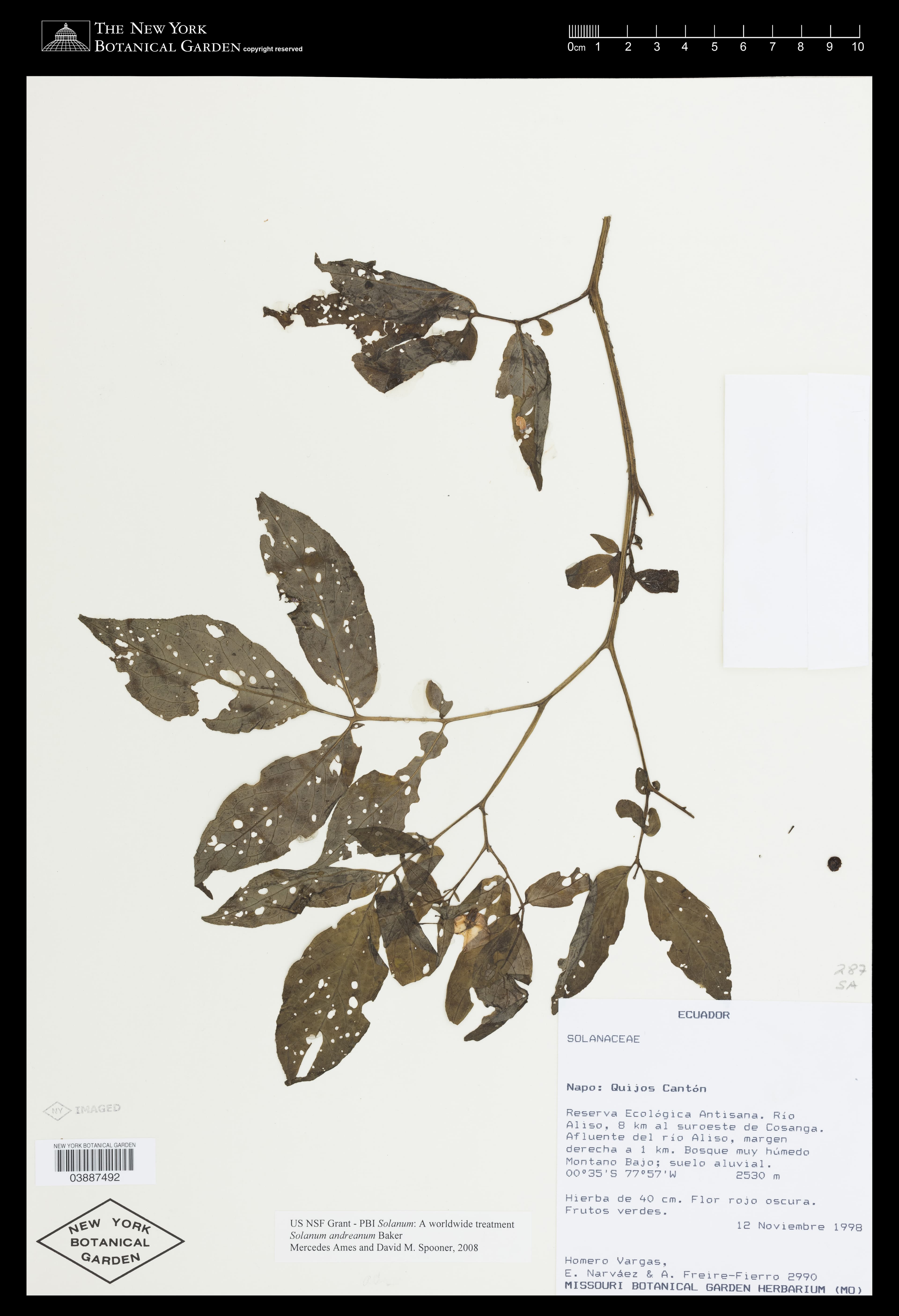
Image: The New York Botanical Garden (cc-by)
NameSolanum andreanum
Scientific NameSolanum andreanum Baker
Plant FamilySolanaceae
Natural HabitatNative to the Antisana Ecological Reserve in Ecuador, found in very humid lower montane forests on alluvial soil at an altitude of 2530 meters.
Parts Usedleaf,fruit
Traditional UsesNo specific traditional medicinal uses for Solanum andreanum are widely documented in ethnobotanical literature. Many species within the Solanum genus are known for containing steroidal glycoalkaloids, which can be toxic, and their medicinal use often requires careful preparation and expert knowledge.
Contraindications & WarningsAs with many species in the Solanum genus, Solanum andreanum is likely to contain steroidal glycoalkaloids which can be toxic. Ingestion of any part of the plant, especially unripe fruits, should be avoided without expert guidance due to potential poisoning. Specific contraindications are not documented due to lack of research on this particular species.
Cultivation NotesPrefers very humid, montane forest conditions with alluvial soil, typical of its native habitat in the Ecuadorian Andes at high altitudes (around 2530 m). Requires consistent moisture and likely a cool, humid climate.
Rarityuncommon
Description
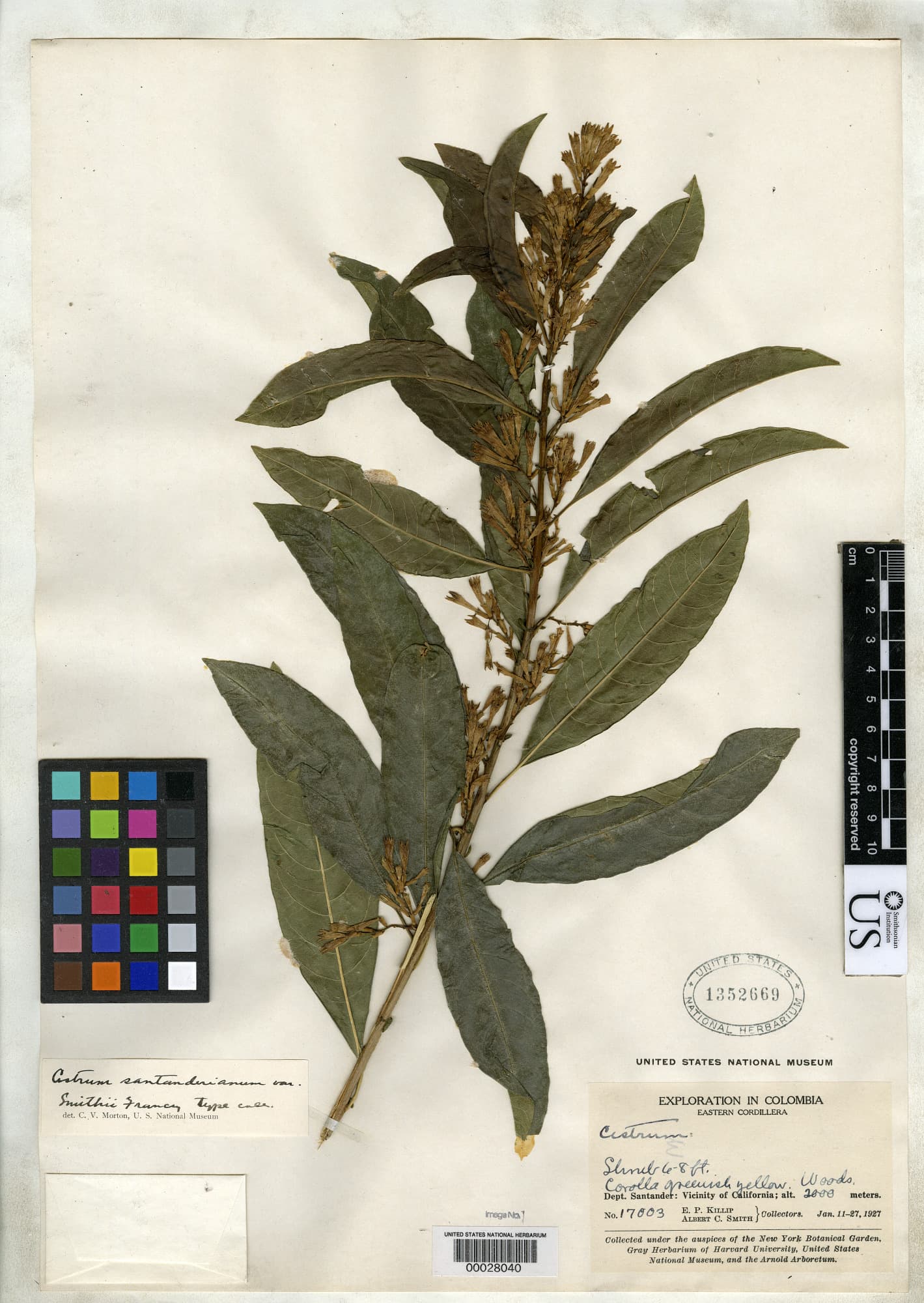
A herbaceous plant, approximately 40 cm tall, characterized by its dark red flowers and green fruits. The specimen shows ovate to elliptic leaves with entire margins, arranged alternately along a branching stem.