Smallflower Jacquemontia
NameSmallflower Jacquemontia
Scientific NameJacquemontia parviflora
Common NamesSmallflower Jacquemontia, Smallflower Morning Glory
Plant FamilyConvolvulaceae
Natural HabitatThis vine is native to tropical and subtropical regions, commonly found in open disturbed areas, forest edges, clearings, and along roadsides. It thrives in full sun to partial shade and prefers well-drained soils.
Parts Usedleaf,whole_plant
Medicinal Actionsanti-inflammatory, antimicrobial, antioxidant
Traditional UsesTraditional uses for Jacquemontia parviflora are not widely documented in mainstream ethnobotanical literature. However, other species within the Jacquemontia genus, particularly the closely related J. paniculata, are traditionally used for their anti-inflammatory properties, for treating skin ailments, fevers, and as a general tonic.
Active ConstituentsFlavonoids, Phenolic compounds, Alkaloids
Preparation Methodsinfusion, poultice, powder
Contraindications & WarningsDue to limited scientific research on Jacquemontia parviflora, specific contraindications are not well-established. As with many plants in the Convolvulaceae family, caution is advised during pregnancy and lactation, and potential gastrointestinal upset should be considered.
Cultivation NotesThis tropical/subtropical vine prefers warm climates, full sun to partial shade, and well-drained soil. It benefits from a support structure for climbing and can be propagated from seeds or cuttings.
Raritycommon
Description
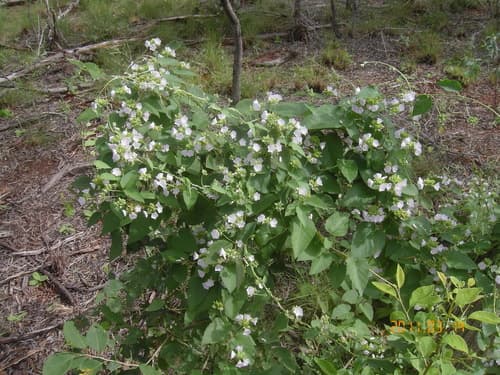
Jacquemontia parviflora is a delicate, herbaceous perennial vine that twines around other vegetation. It features ovate to cordate leaves and produces numerous small, funnel-shaped flowers, typically white to pale blue or lavender, often with a contrasting throat, borne in axillary cymes.