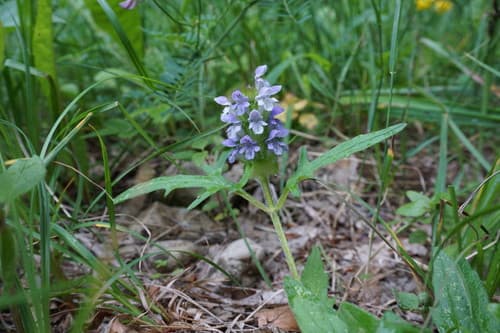
Self-Heal
NameSelf-Heal
Scientific NamePrunella × intermedia
Common NamesSelf-Heal, Heal-all, Woundwort, Carpenter's Herb
Plant FamilyLamiaceae
Natural HabitatCommonly found in meadows, lawns, pastures, woodlands, and disturbed areas across temperate regions. It thrives in moist, well-drained soils and can tolerate a range of light conditions from full sun to partial shade.
Parts Usedwhole_plant,leaf,flower
Medicinal Actionsanti-inflammatory, antimicrobial, antioxidant, astringent
Traditional UsesTraditionally used for wound healing, cuts, and bruises (hence 'Self-Heal' or 'Heal-all'). It has also been employed internally for sore throats, fevers, digestive complaints, and as a general tonic.
Active ConstituentsTriterpenoids, Flavonoids, Tannins, Polysaccharides, Rosmarinic acid
Preparation Methodsinfusion, decoction, tincture, poultice, salve, powder
Contraindications & WarningsGenerally considered safe for most people. Caution is advised during pregnancy and lactation due to insufficient research. Individuals with known allergies to plants in the Lamiaceae family should use with care.
Cultivation NotesAn easy-to-grow plant that prefers full sun to partial shade and moist, well-drained soil. It readily self-seeds and can spread, making it suitable for ground cover or naturalized areas.
Raritycommon
Description
Self-Heal is a low-growing herbaceous perennial characterized by its square stems and opposite, often toothed leaves. It produces dense, terminal spikes of small, two-lipped, purple-blue flowers, typically blooming from late spring to autumn.