Sanicle
NameSanicle
Scientific NameSanicula europaea
Common NamesWood Sanicle, European Sanicle, Sanicle, Black Snakeroot
Plant FamilyApiaceae
Natural HabitatIt typically grows in deciduous and coniferous woodlands, preferring shady, moist, and often calcareous soils. It can be found in forests, clearings, and along woodland edges across Europe, North Africa, and parts of Asia.
Parts Usedleaf,root,whole_plant
Medicinal Actionsastringent, anti-inflammatory, demulcent, expectorant, antimicrobial, antioxidant
Traditional UsesTraditionally, Sanicle has been highly valued for its vulnerary (wound-healing) properties, used externally for cuts, sores, and ulcers. Internally, it was employed as an astringent and expectorant for coughs, sore throats, and respiratory complaints, as well as for digestive issues and as a general tonic.
Active Constituentssaponins, tannins, essential oils, flavonoids, rosmarinic acid
Preparation Methodsinfusion, decoction, tincture, poultice, powder, salve
Contraindications & WarningsGenerally considered safe when used appropriately. Large doses may cause gastrointestinal upset. Caution is advised during pregnancy and lactation due to insufficient research.
Cultivation NotesSanicle thrives in partial to full shade and prefers consistently moist, well-drained soil rich in organic matter, ideally with a neutral to alkaline pH. It can be propagated by seed or division and is relatively low-maintenance once established.
Raritycommon
Description
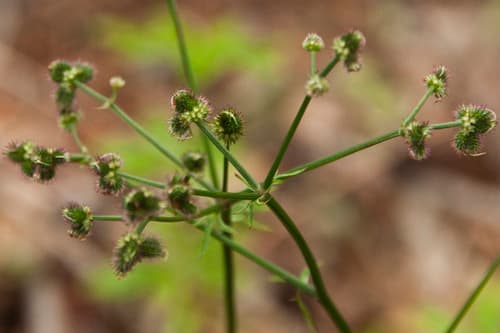
Sanicle is a perennial herbaceous plant characterized by its palmately lobed basal leaves and small, greenish-white flowers arranged in compound umbels. Its most distinctive feature are the burr-like fruits, which are covered in hooked bristles, allowing them to cling to clothing and animal fur for seed dispersal.