Red Clover
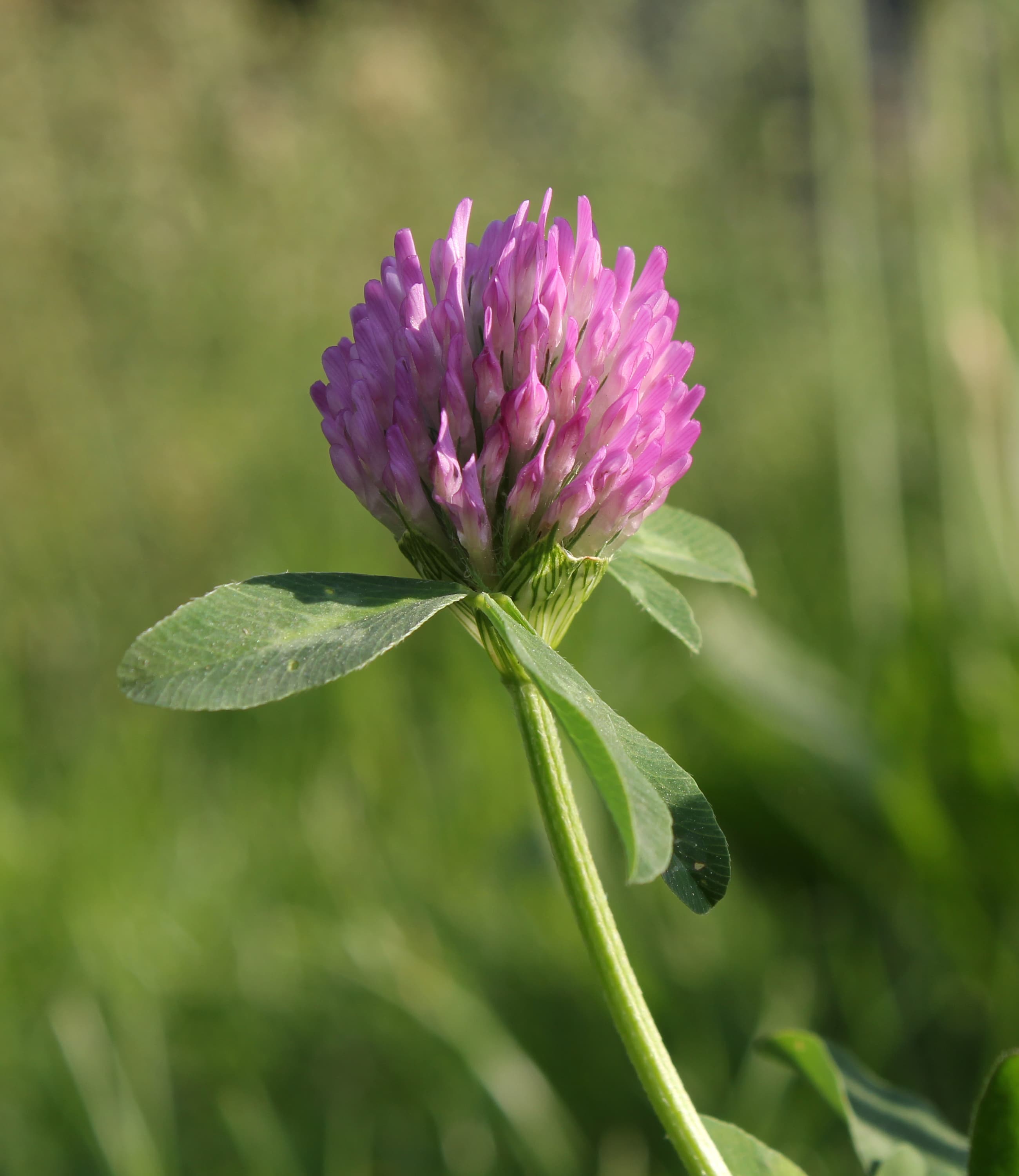
Image: George Chernilevsky (Public domain)
NameRed Clover
Scientific NameTrifolium pratense
Common NamesRed Clover, Purple Clover, Meadow Clover
Plant FamilyFabaceae
Natural HabitatCommonly found in temperate regions across meadows, pastures, fields, roadsides, and disturbed ground. It thrives in well-drained, loamy soils and is often cultivated as a forage crop.
Parts Usedflower,leaf
Medicinal Actionsanti-inflammatory, antioxidant, diuretic, expectorant
Traditional UsesTraditionally used for its blood-purifying properties, Red Clover has been employed to treat skin conditions like eczema and psoriasis. It is also used as an expectorant for coughs and bronchitis, and its isoflavones are valued for supporting women's health, particularly during menopause.
Active ConstituentsIsoflavones (genistein, daidzein, formononetin, biochanin A), Coumarins, Flavonoids, Saponins
Preparation Methodsinfusion, decoction, tincture, powder, salve
Contraindications & WarningsMay interact with blood-thinning medications due to coumarin content. Due to its phytoestrogenic properties, it should be used with caution in individuals with hormone-sensitive conditions or during pregnancy and lactation.
Cultivation NotesRed Clover is easy to grow, preferring full sun to partial shade and well-drained soil. It is a nitrogen-fixing legume, improving soil fertility, and can be sown directly in spring or fall. It is a hardy plant, tolerant of various soil types.
Raritycommon
Description
Red Clover is a herbaceous perennial plant characterized by its distinctive trifoliate leaves, often with a pale chevron mark, and dense, globular flower heads of vibrant pink to purplish-red florets. It typically grows to a height of 20-80 cm, forming a low-lying ground cover or upright stems in meadows.