Queen Anne's Lace
NameQueen Anne's Lace
Scientific NameDaucus carota
Common NamesQueen Anne's Lace, Wild Carrot, Bird's Nest, Bishop's Lace
Plant FamilyApiaceae
Natural HabitatThis plant is commonly found in open fields, meadows, pastures, roadsides, and disturbed areas across temperate regions worldwide. It thrives in full sun and well-drained soil.
Parts Usedroot,seed,flower,leaf
Medicinal Actionsdiuretic, carminative, antimicrobial, antioxidant
Traditional UsesTraditionally, the root of Queen Anne's Lace has been used as a diuretic to support kidney and bladder health, aiding in the expulsion of kidney stones and gravel. The seeds are valued for their carminative properties, helping to relieve digestive discomfort, and have historically been used as a contraceptive or abortifacient. The leaves and flowers have also been used in poultices for skin ailments.
Active Constituentscoumarins, flavonoids, carotenoids, essential oils (carotol, daucol, geraniol), fatty acids
Preparation Methodsinfusion, decoction, tincture, essential oil, powder
Contraindications & WarningsPregnant or breastfeeding individuals should avoid Queen Anne's Lace, especially the seeds, due to its traditional use as an abortifacient and emmenagogue. Individuals with kidney disease should use with caution. There is a risk of photosensitivity with topical application. It is crucial to correctly identify this plant as it has several poisonous look-alikes, such as Poison Hemlock and Water Hemlock.
Cultivation NotesQueen Anne's Lace is easily grown from seed and readily self-seeds, often becoming naturalized. It prefers full sun and well-drained soil, tolerating a range of soil types. It is a biennial, forming a rosette of leaves in the first year and flowering in the second.
Raritycommon
Description
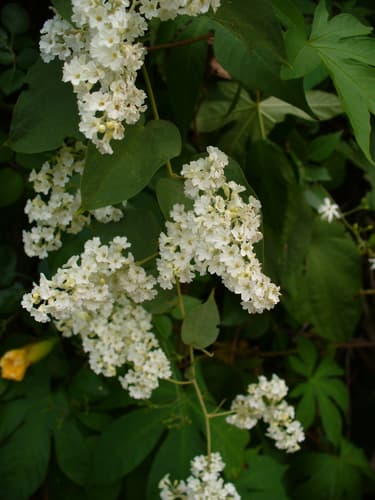
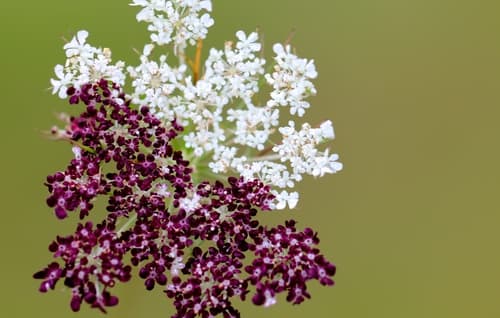
Queen Anne's Lace is a biennial herbaceous plant, typically growing 1-2 meters tall, characterized by its feathery, finely divided leaves and a distinctive flat-topped white flower cluster (umbel). Often, a single dark red or purple floret is found at the center of the umbel, resembling a drop of blood.