Purple Potato
NamePurple Potato
Scientific NameSolanum tuberosum
Common NamesPurple Potato, Blue Potato, Violet Potato, Andean Potato
Plant FamilySolanaceae
Natural HabitatOriginally native to the Andes mountains of South America, it is now widely cultivated globally in temperate climates. It thrives in well-drained, fertile soil.
Parts Usedroot
Medicinal Actionsantioxidant, anti-inflammatory
Traditional UsesTraditionally consumed as a staple food, purple potatoes are valued for their high antioxidant content, particularly anthocyanins, which are believed to support cardiovascular health and reduce inflammation. They are also a good source of essential vitamins and minerals.
Active ConstituentsAnthocyanins, Carotenoids, Phenolic acids, Vitamin C, Potassium
Preparation Methodsdecoction, powder
Contraindications & WarningsThe green parts of the potato plant (leaves, stems, and green tubers) contain toxic glycoalkaloids like solanine and chaconine, which can cause digestive upset, neurological symptoms, and in severe cases, poisoning. Consumption of green or sprouted potatoes should be strictly avoided.
Cultivation NotesPurple potatoes prefer full sun and well-drained, slightly acidic to neutral soil. They are typically planted in spring after the last frost and harvested when the foliage dies back. Consistent moisture is important for good tuber development.
Raritycommon
Description
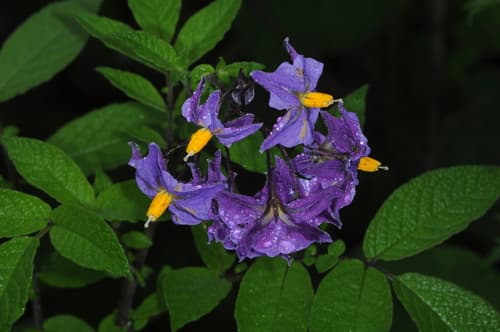
A herbaceous perennial plant cultivated for its starchy tubers. It produces compound leaves and clusters of purple or white flowers with prominent yellow anthers. Purple potato varieties are distinguished by their vibrant purple skin and flesh.