prairie dodder
Image: Conveyor Belt (cc0)
Nameprairie dodder
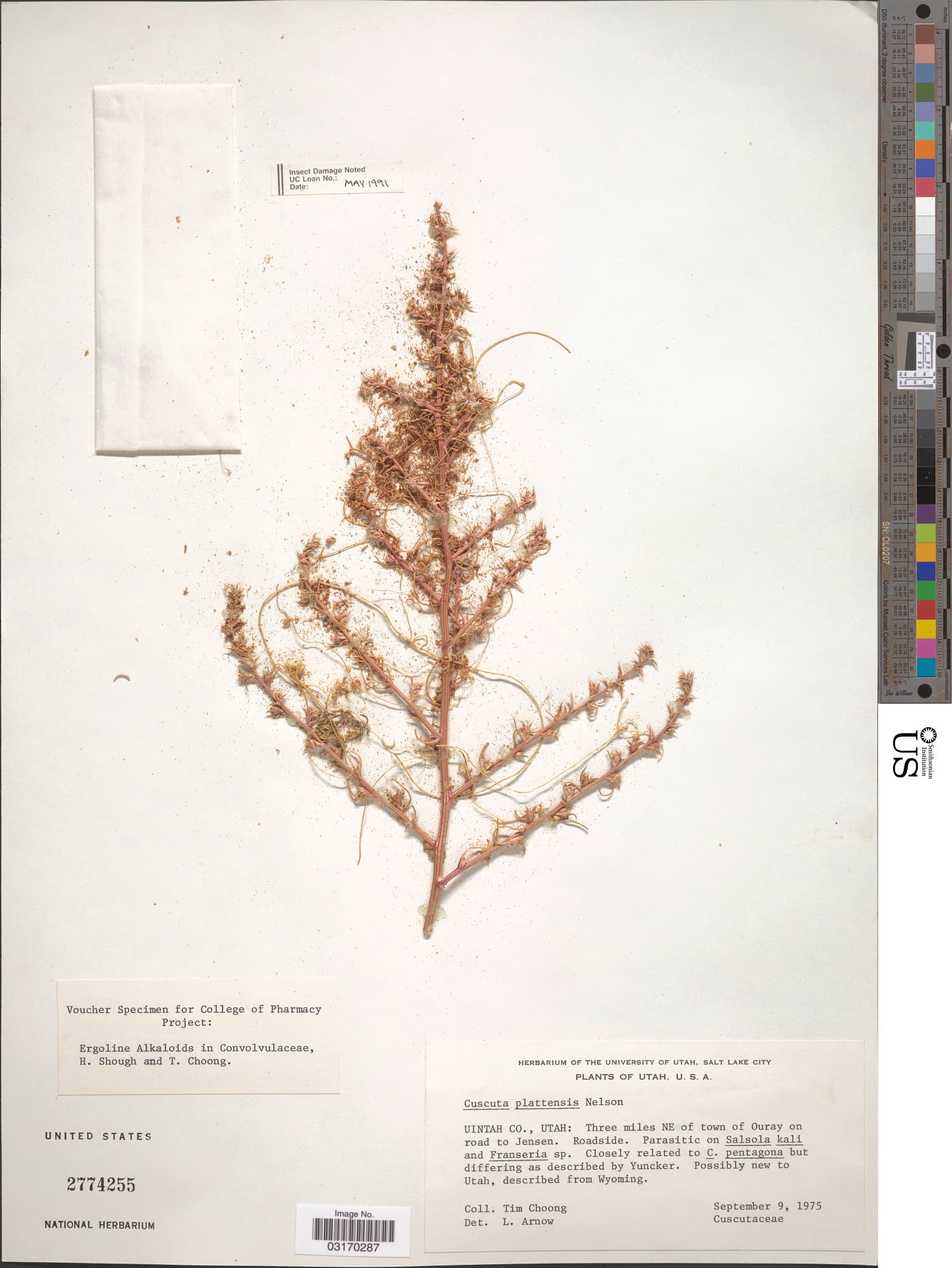
Scientific NameCuscuta plattensis
Common Namesprairie dodder, dodder, love vine, strangleweed
Plant FamilyCuscutaceae
Natural HabitatTypically found in disturbed areas like roadsides, fields, and prairies across central and western North America. It is a parasitic plant, attaching to various host plants, including *Salsola kali* (Russian thistle) and *Franseria* species (ragweed), as observed in Uintah County, Utah.
Parts Usedwhole_plant,seed
Medicinal Actionsadaptogen, anti-inflammatory, antioxidant, astringent, diuretic
Traditional UsesTraditionally, various *Cuscuta* species (especially *C. chinensis* and *C. japonica*) are used in Traditional Chinese Medicine (TCM) as a kidney and liver tonic. It is employed to address conditions such as impotence, premature ejaculation, frequent urination, blurred vision, tinnitus, and back pain. It is also used as a general strengthening tonic.
Active ConstituentsErgoline alkaloids, Flavonoids, Lignans, Polysaccharides
Preparation Methodsinfusion, decoction, powder
Contraindications & WarningsContraindicated during pregnancy due to potential uterine stimulant effects of some constituents. Should be used with caution in individuals with yin deficiency with heat signs or those experiencing constipation.
Cultivation NotesAs a parasitic plant, *Cuscuta plattensis* cannot be cultivated independently. It requires a suitable host plant to germinate and grow, making intentional cultivation challenging.
Raritycommon
Description
A parasitic, herbaceous annual plant characterized by its leafless, thread-like, reddish-brown to yellowish stems that twine around host plants. It produces clusters of small, inconspicuous flowers and fruits along its stems, drawing nutrients from its host.