Pink-throated Morning Glory
NamePink-throated Morning Glory
Scientific NameIpomoea trichocarpa
Common NamesPink-throated Morning Glory, Pink Morning Glory, Small-flowered Morning Glory
Plant FamilyConvolvulaceae
Natural HabitatNative to the southeastern United States and parts of Central and South America, it thrives in disturbed areas, roadsides, fields, open woods, and sandy soils, often found in full sun to partial shade.
Parts Usedroot,leaf,seed
Medicinal Actionsanti-inflammatory, antioxidant
Traditional UsesWhile specific traditional medicinal uses for Ipomoea trichocarpa are not extensively documented, other closely related Ipomoea species have historically been used as strong purgatives to relieve constipation. The leaves of some morning glories are also traditionally applied externally as a poultice for skin irritations or sores.
Active ConstituentsResin glycosides, Flavonoids, Phenolic compounds
Preparation Methodsdecoction, powder, poultice
Contraindications & WarningsDue to potential strong purgative effects, avoid use during pregnancy, lactation, or in individuals with gastrointestinal disorders. Large doses, especially of seeds, can be toxic and may cause nausea, vomiting, and other adverse effects. Consult a healthcare professional before use.
Cultivation NotesThis vigorous vine is easily grown from seed and thrives in full sun to partial shade. It prefers well-drained soils but is adaptable to various soil types and is drought-tolerant once established. Can be invasive in some regions.
Raritycommon
Description
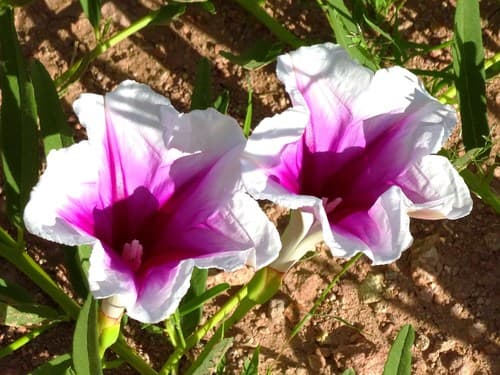
Ipomoea trichocarpa is a herbaceous annual or perennial vine, typically trailing or twining, with slender stems. Its trumpet-shaped flowers are white to pale pink with a distinct deep pink or purplish throat, blooming from summer to fall. The leaves are variable, often heart-shaped or three-lobed, and borne on petioles.