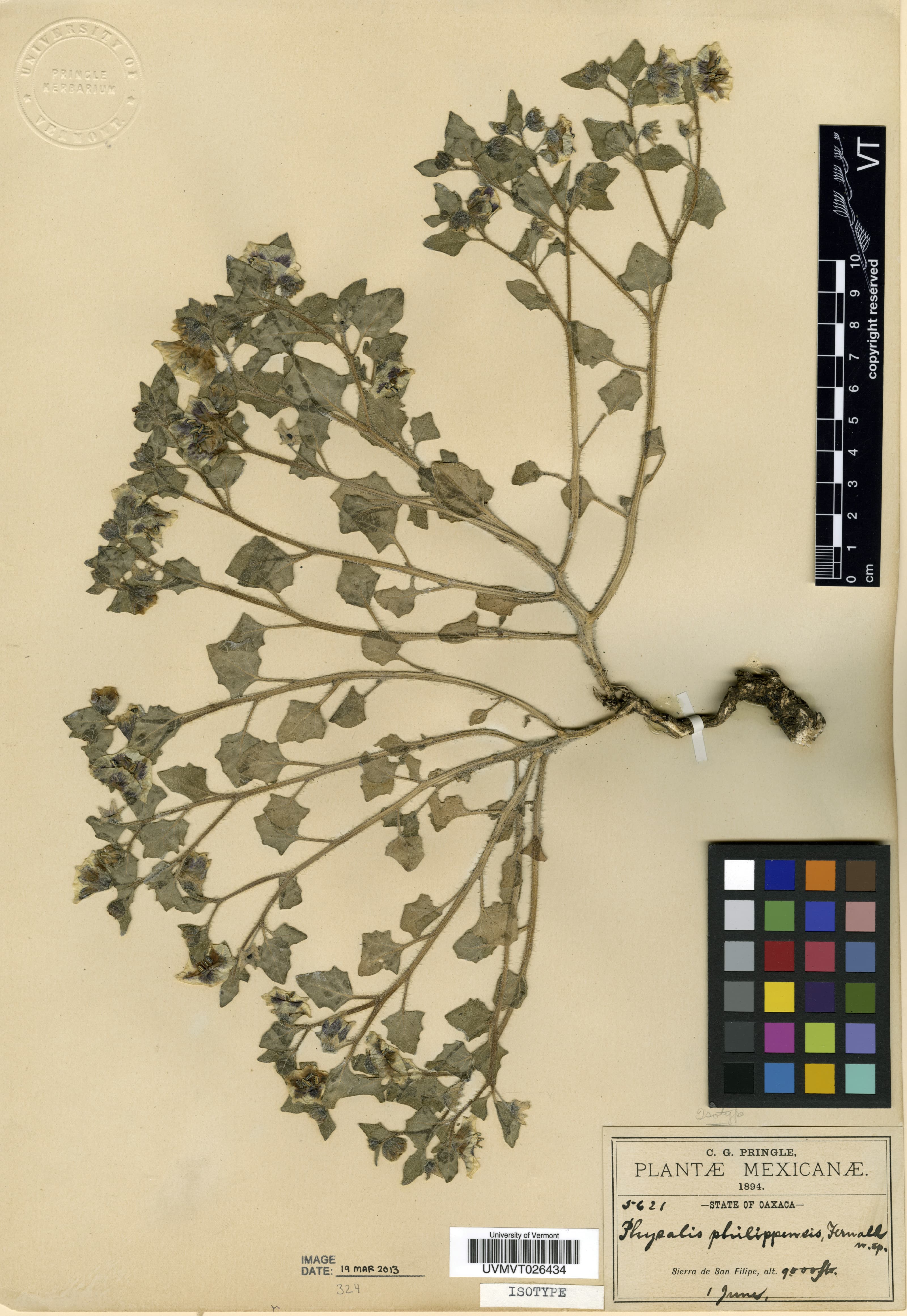
Physalis philippensis
Image: Pringle, C. G. (cc-by-nc)
NamePhysalis philippensis
Scientific NamePhysalis philippensis Fernald
Common NamesGroundcherry
Plant FamilySolanaceae
Natural HabitatNative to high-altitude regions, specifically collected in the Sierra de San Felipe at 9000 feet elevation in the State of Oaxaca, Mexico. It thrives in montane or sub-alpine environments.
Parts Usedleaf,fruit
Medicinal Actionsanti-inflammatory, antioxidant, diuretic
Traditional UsesWhile specific traditional uses for *Physalis philippensis* are not widely documented, other *Physalis* species are traditionally used for their anti-inflammatory properties, to treat fevers, and as diuretics for urinary tract issues. The fruits are often consumed for their nutritional and medicinal benefits.
Active Constituentsphysalins, withanolides, flavonoids, carotenoids
Preparation Methodsinfusion, decoction, tincture, powder
Contraindications & WarningsUnripe fruits of many *Physalis* species can contain solanine-like alkaloids and should be avoided. Caution is advised during pregnancy and breastfeeding. Potential interactions with immunosuppressants or blood-thinning medications should be considered.
Cultivation NotesGenerally, *Physalis* species prefer full sun and well-drained soil. Given its high-altitude origin, *Physalis philippensis* may require specific cooler temperatures or well-drained, rocky soil conditions compared to other groundcherries.
Rarityuncommon
Description
This herbaceous plant exhibits branching stems and ovate to cordate leaves, all covered in fine hairs. Small, campanulate flowers with visible purple venation emerge from the leaf axils, and the plant possesses a fibrous root system.