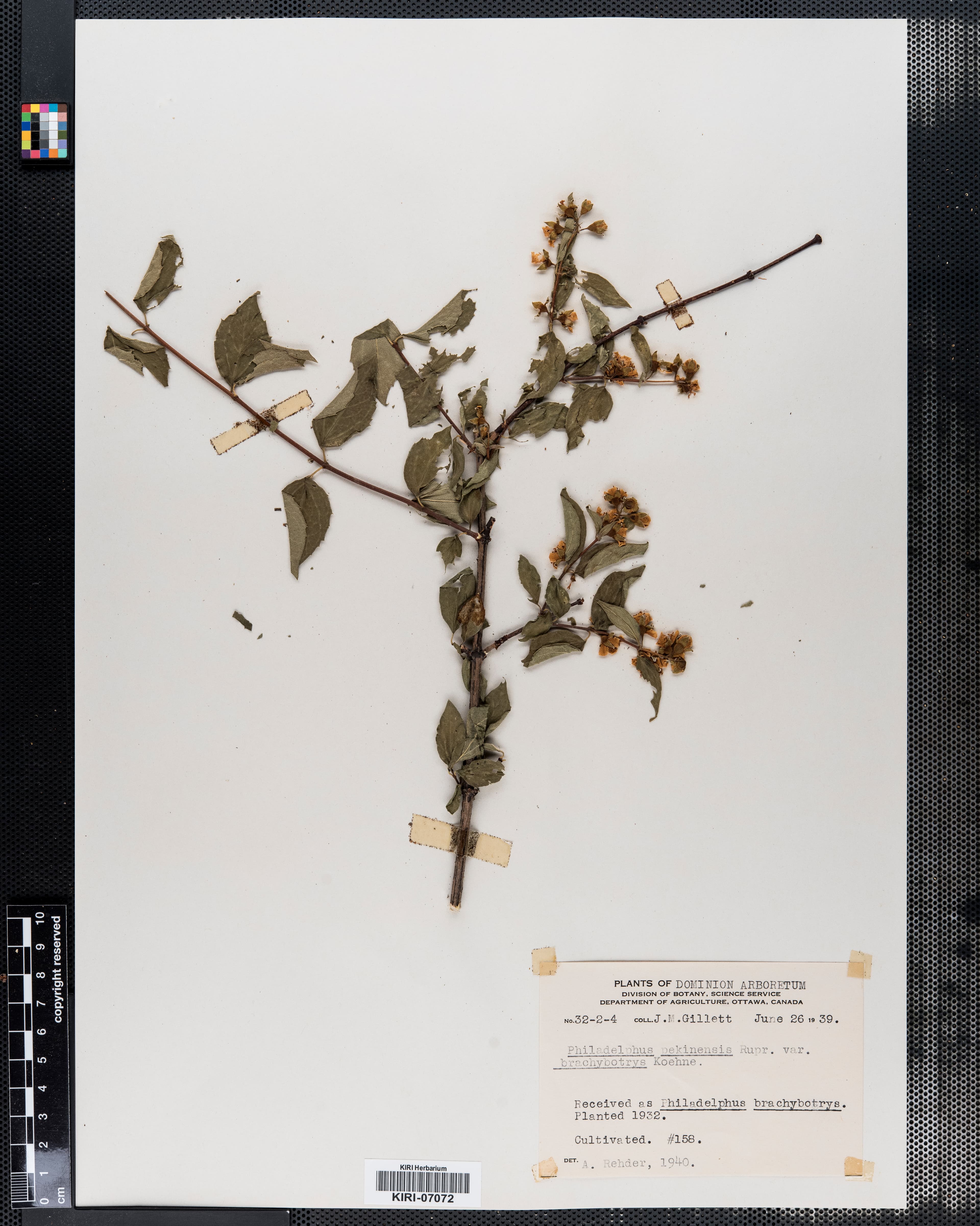
Philadelphus brachybotrys
Image: J. M. Gillett (cc-by-nc)
NamePhiladelphus brachybotrys
Scientific NamePhiladelphus brachybotrys
Common NamesMock Orange, Short-raceme Mock Orange
Plant FamilyHydrangeaceae
Natural HabitatNative to woodlands, thickets, and mountain slopes in central and northern China. It is widely cultivated as an ornamental plant in temperate regions.
Parts Usedflower,leaf
Medicinal Actionsnervine
Traditional UsesWhile primarily cultivated as an ornamental plant for its fragrant blossoms, some species within the Philadelphus genus have been historically noted in folk medicine. The flowers were occasionally used for their pleasant aroma and, in some traditions, as a mild nervine, though specific medicinal uses for Philadelphus brachybotrys are not well-documented.
Active ConstituentsVolatile compounds, Flavonoids
Preparation Methodsinfusion, essential oil
Contraindications & WarningsPhiladelphus brachybotrys is generally considered safe for ornamental use. However, internal medicinal use is not well-studied and is not recommended without expert guidance due to a lack of specific research and potential for mild toxicity in some parts of the genus.
Cultivation NotesThis hardy shrub thrives in full sun to partial shade and prefers well-drained soil. It is relatively low maintenance, tolerates a range of soil types, and is often grown for its attractive flowers and pleasant fragrance.
Raritycommon
Description
Philadelphus brachybotrys is a deciduous shrub native to China, characterized by its arching branches and ovate leaves. It produces clusters of fragrant white flowers in late spring to early summer, followed by small, inconspicuous fruit capsules.