Parsley
NameParsley
Scientific NamePetroselinum crispum
Common NamesParsley, Garden Parsley, Common Parsley
Plant FamilyApiaceae
Natural HabitatNative to the central Mediterranean region, parsley is now widely cultivated globally in gardens and agricultural settings, thriving in moist, well-drained soil and preferring full sun to partial shade.
Parts Usedleaf,root,seed
Medicinal Actionsdiuretic, carminative, antioxidant, anti-inflammatory, antimicrobial
Traditional UsesTraditionally, parsley has been used as a diuretic to support kidney and bladder health, to aid digestion and alleviate flatulence, and as a breath freshener. It has also been employed to stimulate menstruation and as a general tonic for its rich nutrient content.
Active ConstituentsApiol, Myristicin, Flavonoids, Coumarins, Vitamins (K, C, A)
Preparation Methodsinfusion, decoction, powder, essential oil
Contraindications & WarningsHigh doses, especially of parsley essential oil or seed preparations, should be avoided during pregnancy due to potential emmenagogue and abortifacient effects. It can interact with anticoagulant medications due to its high Vitamin K content and may increase photosensitivity. Not recommended for individuals with severe kidney inflammation.
Cultivation NotesParsley prefers rich, moist, well-drained soil and thrives in full sun to partial shade. Seeds can be slow to germinate, often benefiting from soaking. It requires consistent watering and regular harvesting of outer leaves to encourage new growth.
Raritycommon
Description
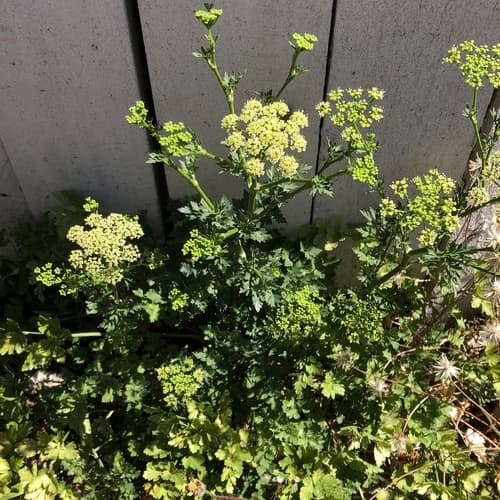
Parsley is a biennial herb, often cultivated as an annual, distinguished by its bright green, deeply cut, tripinnate leaves. In its second year, it produces small, yellowish-green flowers arranged in characteristic compound umbels on tall, branching stalks.